
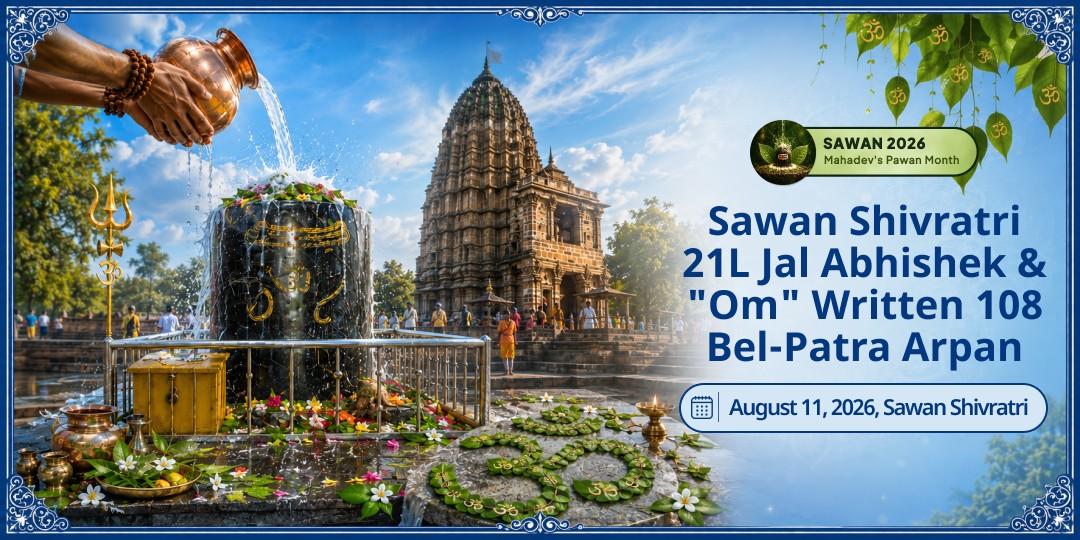
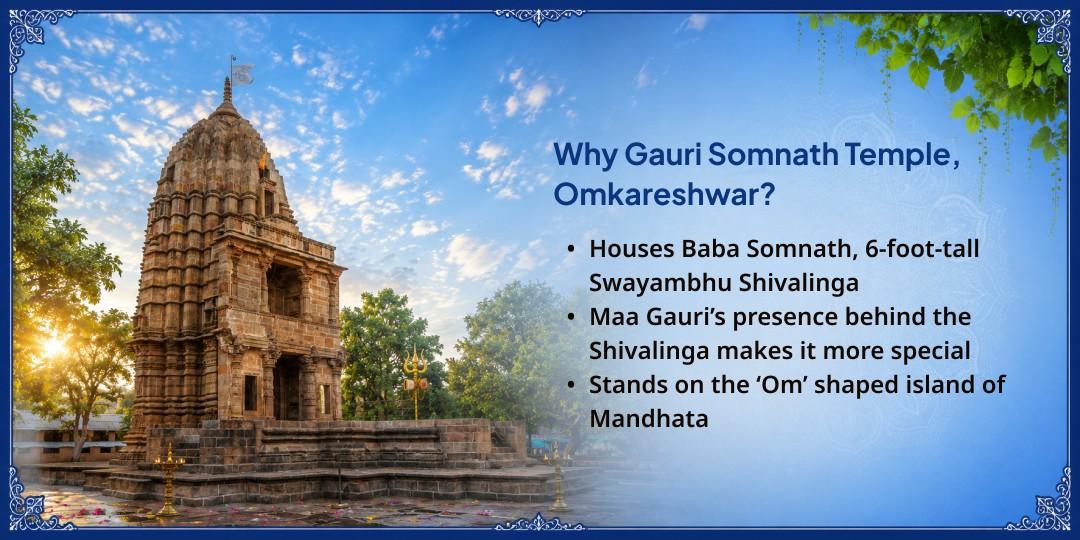
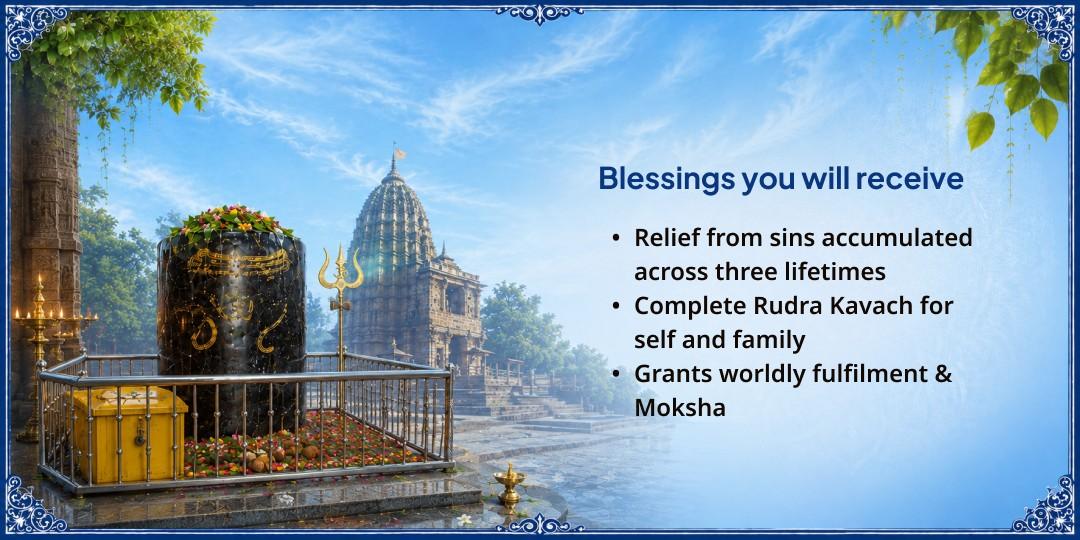
21 Litre Jal Abhishek & "Om" Written 108 Bilva Patra Arpan at Gauri Somnath Temple For Karmic Relief, Bhukti & Moksha - Join Now!
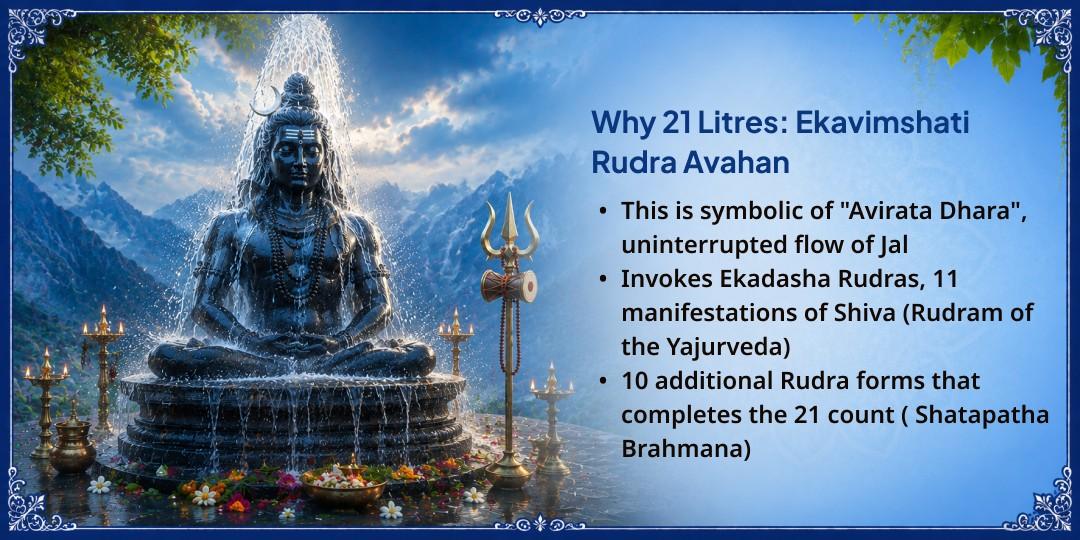
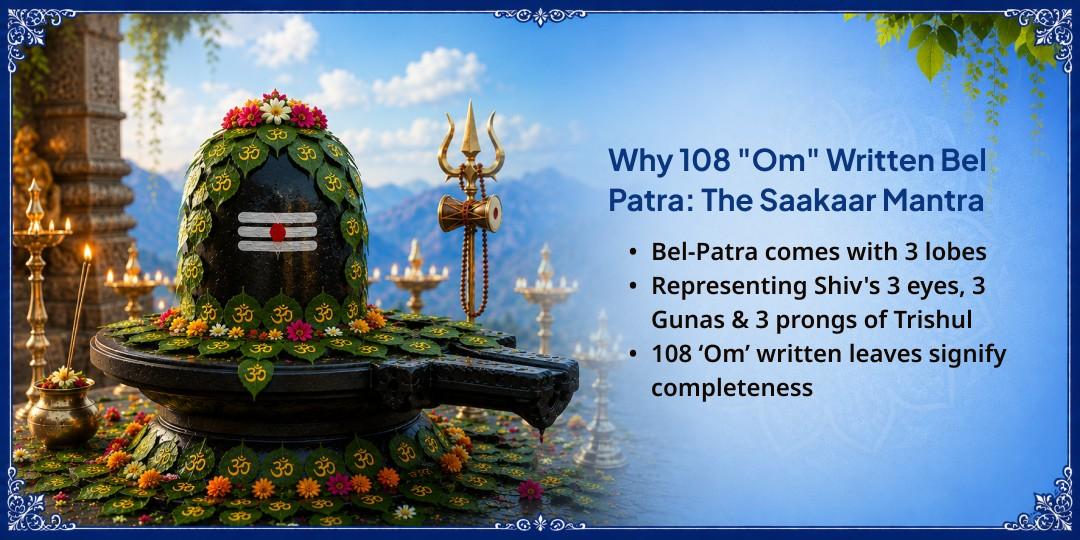
🌊 Why 21 Litres? — Avirata Dhara and the Ekavimshati Rudras The Agamic tradition calls an unbroken stream of Jal offered over a Shivalinga "avirata dhara" — the continuous flow that does not pause, that leaves no single moment of separation between devotee and deity. This campaign performs it in the 21-litre format — and the number 21 is precise theological architecture. The Vedic tradition recognises 21 Rudra manifestations: the 11 Ekadasha Rudras of the Shri Rudram — the supreme Rudra hymn of the Yajurveda — plus 10 additional Rudra forms catalogued in the Shatapatha Brahmana. When 21 litres are poured in sequence, each litre as a dedicated invocation, all 21 Rudra manifestations are honoured in one continuous Abhishek. A single-litre Jalabhishek honours Shiva in one form. The 21-litre Avirata Dhara honours every Rudra form — without exception, without omission. 🍃 Why "Om" Likhit 108 Bilva? — The Making of Saakaar Mantra The Bilva leaf is not merely a sacred offering — it is a living Trishul. Its three lobes simultaneously represent Shiva's three eyes, the three Gunas, and the three prongs of the Trishul. The Shiva Purana holds a specific promise found for no other offering: "Bilva-patrasya ekam daanam bhuktim moksham prayacchati" — even one Bilva leaf offered with devotion grants both bhukti (earthly fulfilment) AND moksha (liberation). Most offerings grant one or the other. Bilva alone grants both simultaneously. This campaign takes the Bilva offering further: each leaf is inscribed with "Om" before being placed at Shiva's feet. A mantra spoken in sound is time-bound — it exists in a moment and passes. A mantra written becomes material — space-bound, permanent. By inscribing "Om" on each Bilva leaf, the devotee creates Saakaar Mantra — the mantra made tangible, given physical form. One hundred and eight such Saakaar Mantras, offered at the kshetra where OM is not a sound but the shape of the sacred island itself — this is a devotional act without parallel in ordinary ritual practice.


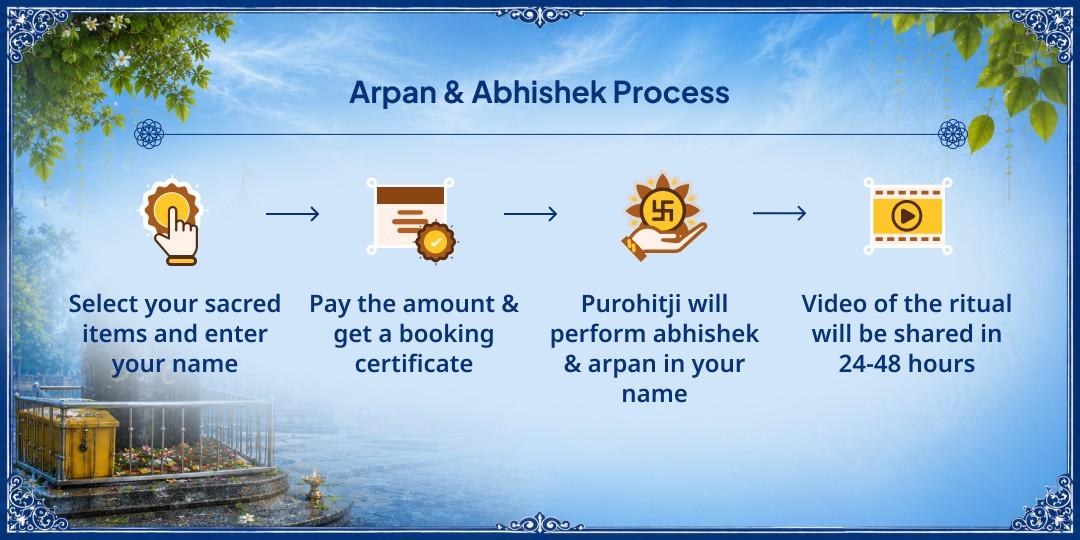
Through the Sri Mandir Chadhava Service App, your offering will be devoutly presented by our experienced Purohits. You will receive a video of the ritual within 24-48 hours, bringing you divine blessings and prosperity.
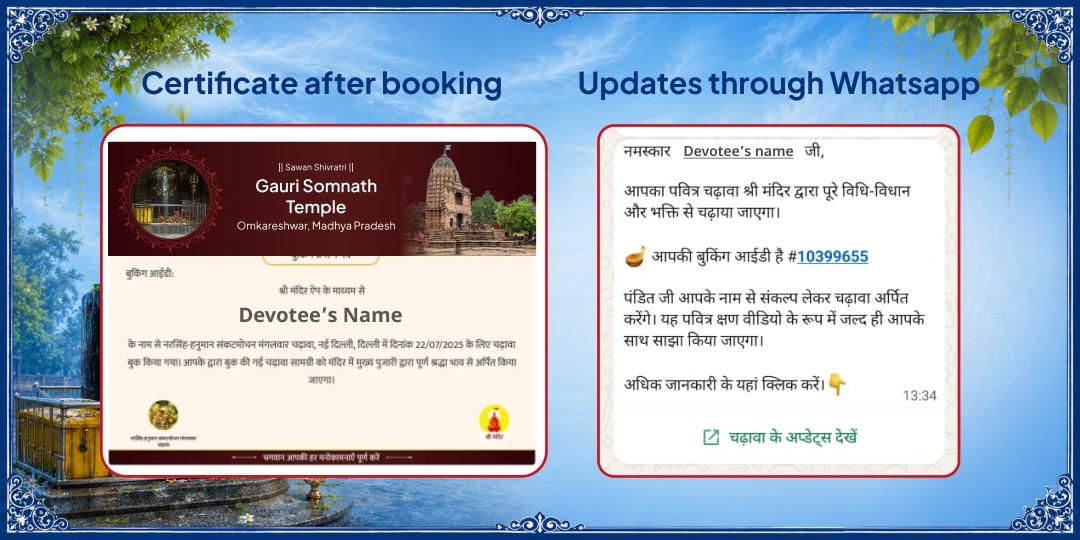
Yes, once you book an offering, you will receive a certificate immediately. You can view your certificate under the 'Services' page in the 'Your Bookings' section.
After booking, you will receive updates via WhatsApp. Additionally, you can check the complete details of your offering in the "Chadhava Bookings" section of the Sri Mandir App.
Sri Mandir is an App that allows you to book chadhavas at more than 100 renowned temples across India from the comfort of your home. You can select multiple options and include them in a single order.
If you face any issues with your Chadhava, you can contact our Sri Mandir customer service team at 💬7829661119 or 📞08071174417, who are always ready to assist you.