 Download
 Share


Diwali 2026
Discover its divine significance, Lakshmi Puja timings, five-day festival traditions, puja vidhi, and everything you need to celebrate this auspicious occasion.
Diwali 2026
1. 5 Days of Diwali and Their Significance 2. Diwali 2026 Date and Important Details 3. Diwali 2026 Puja Time and Shubh Muhurat 4. Why Is Diwali Celebrated? 5. Diwali 2026 Five-Day Festival Calendar 6. Diwali Puja Samagri List 7. Diwali Puja Vidhi: How to Perform Lakshmi Puja at Home 8. Lakshmi Mantra and Aarti for Diwali 9. Diwali Katha: The Story Behind the Festival 10. How to Celebrate Diwali 2026 at Home? 11. Frequently Asked Questions About Diwali 2026 12. Conclusion
Pujas Chosen Just for You
Conduct a Puja in your name and gotra and seek divine blessings for your family.
Diwali 2026 Date: Lakshmi Puja Muhurat, Puja Vidhi, Timings and Significance
Diwali, also known as Deepavali, is one of India's most celebrated Hindu festivals. It symbolises the victory of light over darkness, good over evil and knowledge over ignorance. Families celebrate by lighting diyas, decorating their homes, exchanging sweets and worshipping Goddess Lakshmi and Lord Ganesha. The Diwali 2026 date is Sunday, 8 November 2026. The festival falls on Kartik Amavasya and is considered especially auspicious for Lakshmi Puja, prayers for prosperity and new beginnings. If you are wondering when is Diwali? (Diwali kab hai), what the auspicious puja timings are, or how to perform Lakshmi Puja at home, this guide covers everything you need to know.
5 Days of Diwali and Their Significance
Diwali is a five-day festival celebrated across India, with each day carrying its own religious and cultural significance. From worshipping Goddess Lakshmi for prosperity to honouring Lord Krishna's victory over evil and celebrating the bond between siblings, these traditions reflect gratitude, devotion, and new beginnings. While customs differ across North and South India, devotees mark these auspicious occasions through prayers, temple rituals, charity, and acts of seva.
Govatsa Dwadashi – 5 November 2026
Govatsa Dwadashi, also known as Vasu Baras in Maharashtra, is dedicated to honouring cows and calves, which hold a sacred place in Hindu tradition. The observance is also associated with Lord Krishna's childhood as a cowherd in Vrindavan.
Dhanteras – 6 November 2026
Dhanteras marks the beginning of the main Diwali celebrations in many parts of India. According to Hindu tradition, Lord Dhanvantari emerged during Samudra Manthan carrying the pot of Amrit, symbolising health and well-being. The day is also associated with Goddess Lakshmi and Lord Kubera, who are worshipped for prosperity and financial stability. Devotees traditionally purchase gold, silver, or utensils as symbols of auspicious beginnings.
Naraka Chaturdashi (Choti Diwali) – 7 November 2026
Naraka Chaturdashi commemorates Lord Krishna's victory over the demon Narakasura, symbolising the triumph of righteousness over evil. According to popular traditions, Lord Krishna, accompanied by Satyabhama in several accounts, defeated Narakasura and liberated those held captive.
In South India, Naraka Chaturdashi is a major part of Diwali celebrations. Families traditionally wake before sunrise, take an Abhyanga Snan (ritual oil bath), wear fresh clothes, and light lamps. In North India, the day is commonly observed as Choti Diwali, with homes illuminated in preparation for Lakshmi Puja.
Diwali – 8 November 2026
Diwali celebrates Lord Rama's return to Ayodhya with Maa Sita and Lakshmana after 14 years of exile and his victory over Ravana. Devotees illuminate their homes with diyas and worship Goddess Lakshmi and Lord Ganesha for prosperity and auspicious beginnings.
Govardhan Puja – 9 November 2026
Govardhan Puja commemorates Lord Krishna lifting Govardhan Hill to protect the people of Vrindavan from heavy rainfall caused by Indra. Devotees prepare Annakut, an offering of various food items, as a symbol of gratitude and devotion.
Bhai Dooj – 10 November 2026
Bhai Dooj celebrates the sacred bond between brothers and sisters. According to Hindu tradition, Yamuna welcomed her brother Yamaraja with a tilak and a special meal. Sisters apply tilak and pray for their brothers' health and longevity, while brothers offer gifts and blessings in return. Families may also perform [Family Well-Being Puja – Internal Link: Sri Mandir Puja] to seek divine protection and harmony.
Diwali 2026 Date and Important Details
The Diwali 2026 date falls on 8 November, Sunday. Here are the important details for devotees planning their celebrations.
Particulars | Details |
Festival | Diwali / Deepavali |
Diwali 2026 Date | 8 November 2026 |
Day | Sunday |
Hindu Tithi | Kartik Amavasya |
Amavasya Begins | 8 November, 11:27 |
Amavasya Ends | 9 November, 12:31 |
Main Deities | Maa Lakshmi and Lord Ganesha |
Lakshmi Puja Muhurat | 5:54 PM–7:50 PM IST (New Delhi) |
The Diwali 2026 date is determined by the Hindu lunar calendar. Although Amavasya continues into 9 November, the main celebration takes place on 8 November because Amavasya is present during the evening Pradosh Kaal.
Diwali 2026 Puja Time and Shubh Muhurat
Performing Lakshmi Puja during an auspicious muhurat is an important Diwali tradition. The diwali puja muhurat is generally observed during Pradosh Kaal, especially when it overlaps with Vrishabha Lagna.
For devotees searching for the diwali puja time, here are the timings for New Delhi.
Puja Details | Auspicious Timing |
Lakshmi Puja Muhurat | 5:54 PM–7:50 PM |
Pradosh Kaal | 5:31 PM–8:09 PM |
Vrishabha Lagna | 5:54 PM–7:50 PM |
Puja Duration | 1 hour 56 minutes |
The lakshmi puja muhurat 2026 varies according to location. Devotees should consult their local Hindu Panchang before performing the rituals.
Why Is Diwali Celebrated?
Diwali celebrates the victory of good over evil, symbolising prosperity, spiritual renewal and new beginnings. However, its religious significance and traditions vary across North and South India. In North India, Diwali is closely associated with Lord Rama's return to Ayodhya after 14 years of exile and his victory over Ravana. According to the Ramayana tradition, the people of Ayodhya welcomed Lord Rama, Maa Sita and Lakshmana by lighting rows of diyas. The festival is also considered especially auspicious for Lakshmi-Ganesha Puja, performed to seek blessings for wealth, wisdom and prosperity. In South India, Deepavali is prominently associated with Lord Krishna's victory over the demon Narakasura, symbolising the destruction of evil and the restoration of righteousness. In states such as Tamil Nadu, Karnataka, Andhra Pradesh and Telangana, devotees traditionally begin celebrations with an early-morning oil bath (Abhyanga Snanam), prayers and festive offerings. Specific customs vary across communities. The Diwali 2026 date, 8 November, brings together these diverse traditions. Through Sri Mandir, devotees can explore region-specific pujas, from Lakshmi-Ganesha worship in North India to Krishna and Narakasura-related Deepavali rituals in South India, honouring the spiritual significance of the festival across both regions.
Diwali 2026 Five-Day Festival Calendar
Diwali is traditionally celebrated through five major observances, each carrying a distinct religious significance.
Diwali 2026: Important Dates and Significance
Festival | Date in 2026 | Significance |
Govatsa Dwadashi | 5 November | Honouring cows and calves through worship and seva |
Dhanteras | 6 November | Worship of Lakshmi, Kuber and Dhanvantari for prosperity and health |
Kali Chaudas | 7 November | Prayers to Maa Kali for protection from negativity |
Naraka Chaturdashi (Choti Diwali) | 8 November | Celebrating Lord Krishna's victory over Narakasura |
Diwali / Lakshmi Puja | 8 November | Welcoming prosperity through Lakshmi-Ganesh Puja and lighting diyas |
Govardhan Puja | 10 November | Honouring Lord Krishna through Govardhan worship and Annakut offerings |
Bhai Dooj | 11 November | Celebrating sibling bonds through tilak and prayers for well-being |
The Diwali 2026 date marks the main Lakshmi Puja celebration, while the surrounding observances honour different deities and traditions. Regional customs vary. In some traditions, Narak Chaturdashi rituals take place on the morning of 8 November.
Diwali Puja Samagri List
Before beginning the worship, devotees should arrange the essential items. A traditional diwali puja samagri list includes:
Puja Samagri | Purpose |
Lakshmi-Ganesha idols or pictures | Main worship |
Kalash, water and mango leaves | Sacred preparation |
Diyas and ghee or oil | Lighting sacred lamps |
Kumkum, haldi and akshat | Traditional offerings |
Fresh flowers and lotus | Offerings to Maa Lakshmi |
Fruits, sweets and prasad | Bhog offerings |
Incense and camphor | Aarti and worship |
Coins and new account books | Symbols of prosperity |
Additional offerings may be included according to family traditions
Diwali Puja Vidhi: How to Perform Lakshmi Puja at Home
The diwali puja vidhi involves preparing a clean worship space, invoking the deities and offering prayers with devotion.
Step-by-Step Lakshmi Puja Vidhi
-
Clean the puja area: Decorate your home with rangoli, flowers and diyas.
-
Prepare the altar: Place Maa Lakshmi and Lord Ganesha's idols on a clean, decorated chowki.
-
Establish the Kalash: Fill a kalash with water and arrange mango leaves and a coconut according to tradition.
-
Begin with Ganesh Puja: Offer prayers to Lord Ganesha for auspicious beginnings.
-
Perform Lakshmi Puja: Offer flowers, kumkum, akshat, sweets and prayers to Maa Lakshmi.
-
Chant sacred mantras: Recite a Lakshmi mantra with devotion.
-
Perform Aarti: Conclude with Lakshmi Aarti and distribute prasad.
This simple lakshmi puja vidhi can be followed at home, while elaborate rituals may be performed with the guidance of a priest.
Lakshmi Mantra and Aarti for Diwali
Chanting sacred mantras is an important part of Diwali worship. Devotees recite a lakshmi mantra to seek blessings for prosperity, peace and spiritual well-being.
Lakshmi Mantra:
ॐ श्रीं महालक्ष्म्यै नमः॥
Meaning: Salutations to Goddess Mahalakshmi, the divine source of prosperity and abundance.
Lakshmi Ji Ki Aarti
Lakshmi ji ki aarti is traditionally performed after the main puja with a lit diya, accompanied by devotional singing.
One of the most popular aartis begins with Om Jai Lakshmi Mata. Devotees sing the to express gratitude and seek Maa Lakshmi's blessings.
Families may follow their customary version of the aarti and conclude by offering prasad.
Diwali Katha: The Story Behind the Festival
The most widely known diwali katha tells the story of Lord Rama's return to Ayodhya.
After defeating Ravana and completing his exile, Lord Rama returned with Maa Sita and Lakshmana. The people celebrated his arrival by illuminating Ayodhya with countless lamps.
This tradition represents the victory of righteousness over evil and the triumph of hope over hardship.
Diwali is also associated with Maa Lakshmi's worship, Lord Krishna's victory over Narakasura and other regional traditions.
How to Celebrate Diwali 2026 at Home?
The Diwali 2026 date, 8 November, coincides with Kartik Amavasya, making the evening especially significant for Lakshmi-Ganesha worship. According to Hindu tradition, performing Lakshmi Puja during Pradosh Kaal, particularly when it overlaps with Vrishabha Lagna, is considered auspicious for seeking wealth and prosperity. An interesting Diwali tradition is Bahi-Khata Puja, where business owners worship their account books and financial records, seeking Maa Lakshmi's blessings for a prosperous financial year. Many families also draw Lakshmi Charan, symbolic footprints of Goddess Lakshmi, near their entrances to welcome prosperity into their homes. Devotees can also perform Deep Daan, offer food to those in need and participate in temple rituals as expressions of gratitude and devotion. For those unable to visit sacred temples, Sri Mandir enables devotees to book traditional pujas performed by priests on their behalf, with personalised Sankalp and Puja Vidhi, helping them stay connected with their faith from anywhere.
Frequently Asked Questions About Diwali 2026-
1. Diwali kab hai 2026 mein?
The Diwali 2026 date is Sunday, 8 November 2026. The main Lakshmi-Ganesha Puja is performed during the evening.
2. What is the Diwali Puja Muhurat in 2026?
For New Delhi, the auspicious diwali puja muhurat is 5:54 PM to 7:50 PM on 8 November 2026. Timings vary by location.
3. Why is Lakshmi Puja performed on Diwali?
Lakshmi puja is performed to seek Maa Lakshmi's blessings for wealth, prosperity, harmony and financial well-being.
4. What is the best Lakshmi mantra for Diwali?
A commonly recited lakshmi mantra is "Om Shreem Mahalakshmyai Namah," traditionally chanted to honour Goddess Lakshmi.
5. Is Diwali on 8 or 9 November 2026?
The Diwali 2026 date is 8 November. Although Amavasya continues into 9 November, the main Lakshmi Puja takes place on 8 November.
Conclusion
Diwali is a celebration of faith, prosperity, hope and togetherness. The Diwali 2026 date, 8 November, provides devotees an opportunity to worship Maa Lakshmi and Lord Ganesha, follow sacred traditions and welcome positive beginnings.
By observing the auspicious muhurat, performing puja with devotion and sharing happiness with others, families can celebrate the true spirit of Deepavali.

Did you like this article?
Recommended
Read more
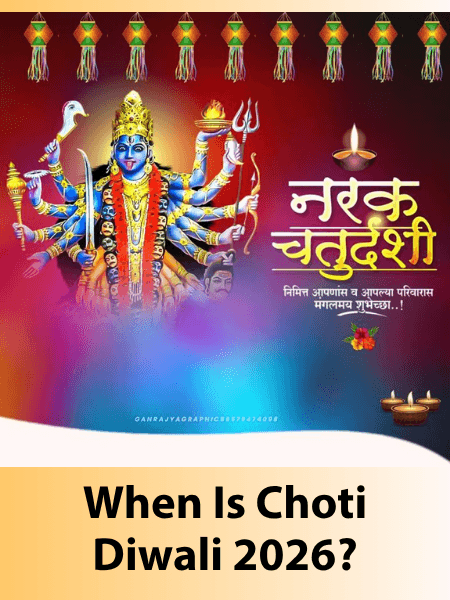
Narak Chaturdashi 2026
All you need to know about Narak Chaturdashi 2026: Choti Diwali date, Abhyang Snan muhurat, step-by-step puja vidhi, Narakasura katha and significance.

Holi Puja Vidhi Step-by-Step Guide
Perform Holi Puja 2026 correctly with this step-by-step guide. Know Holika Dahan muhurat, पूजा सामग्री, rituals, and the spiritual significance of Holi worship.
Holi in Mathura and Vrindavan
Experience Holi 2026 in Mathura and Vrindavan. Discover famous celebrations like Lathmar Holi, Phoolon ki Holi, temple rituals, and travel tips for the festival.