
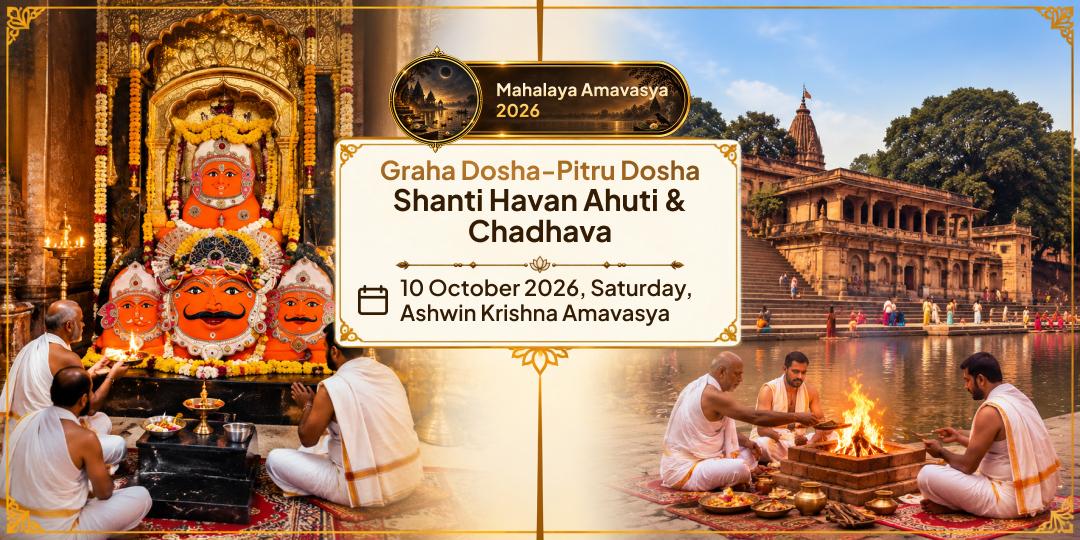
Mahalaya Shani Amavasya Kundli Graha Dosh-Pitru Dosh Shanti Havan Ahuti & Chadhava
🪐Mahalaya Shani Amavasya - the Unprecedented Confluence That Arrives Once in Years
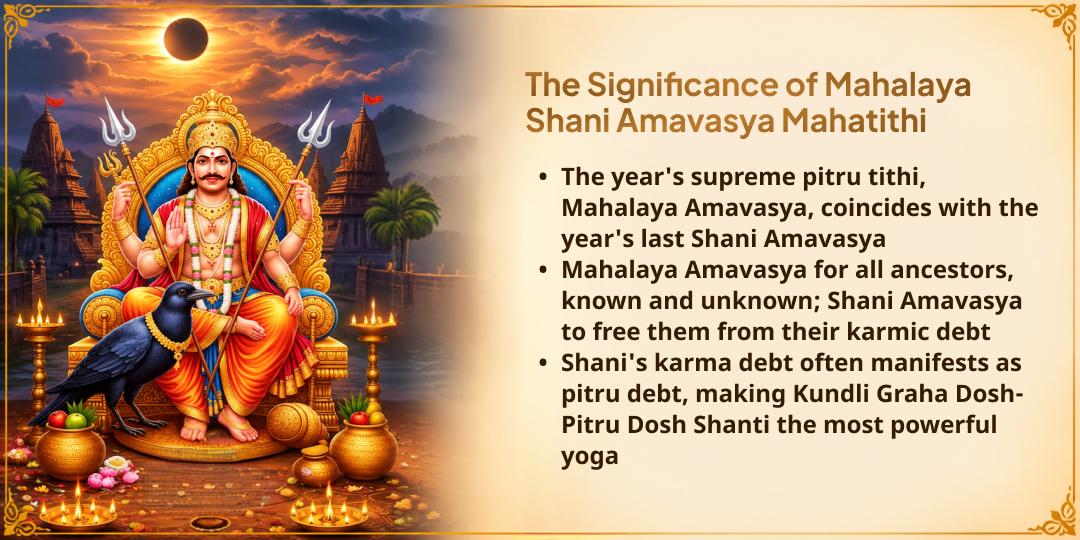
October 10, 2026, Mahalaya Amavasya - the final and greatest day of Pitru Paksha. And this day falls on a Saturday, Shanidev's own day. On this day, two great powers reach their peak together: the gateway to Pitru Lok stands at its widest, and Shani's karma-shakti is at its most active, on his own day. This is the day when both graha dosh and pitru dosh can be pacified together, each at its own source. 🏛️Shri Navgrah Shani Temple, Ujjain - Resolving Graha Dosh at Its Very Center
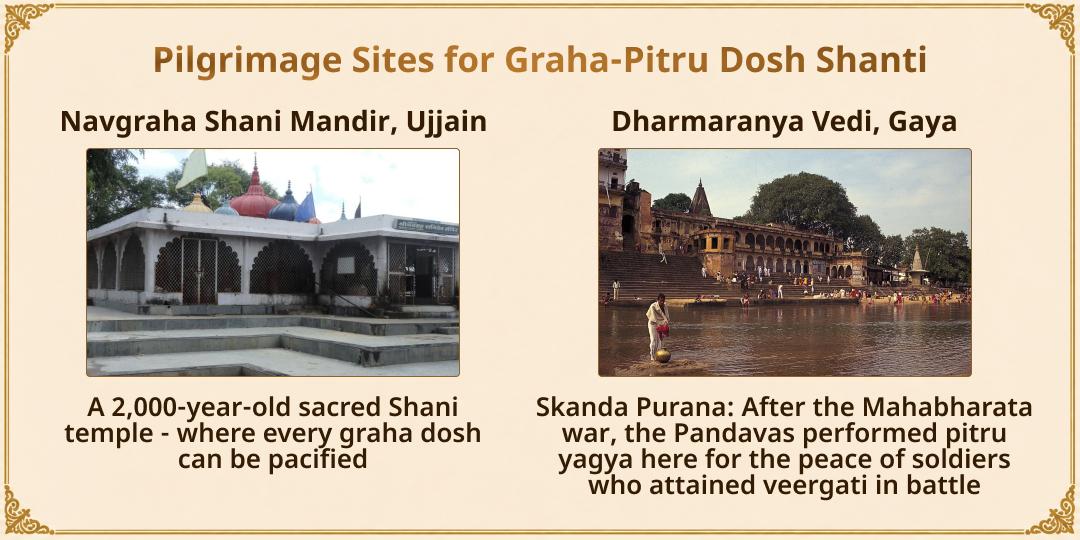
Ujjain is India's astrological capital - the city that sits upon the Tropic of Cancer and India's own kaal-rekha (prime meridian). Here stands the Shri Navgrah Shani Temple, where Shanidev sits enthroned at the center of all nine grahas.
Chadhava and Havan here mean complete graha-shanti - not Shani alone, but the entire Navgraha-mandal, including Rahu, Ketu, Mangal, and Surya, pacified together. And on Mahalaya Shani Amavasya, Shani's own day, this Chadhava-Havan in Ujjain is the very karma-shuddhi that strikes at the root of years of Shani-dosh.
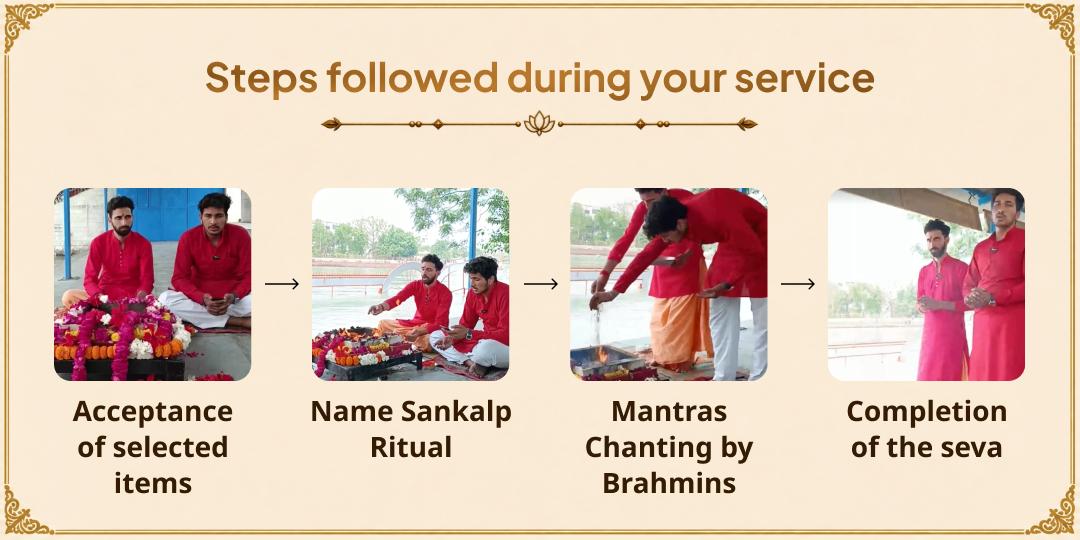
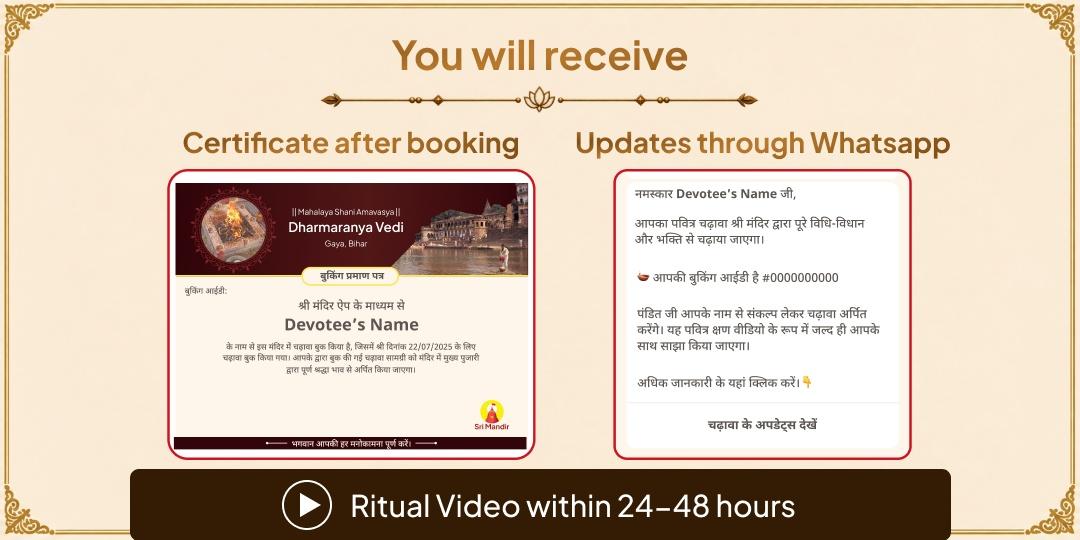
🔥 Dharmaranya Vedi, Gaya - Resolving Pitru Dosh at Its Very Source
Garuda Purana declares: " By performing Shraddh at Dharmaranya, a person attains Swargalok and is freed from pitru-rin." Pitru-rin - the karma-bandhan that remains upon a lineage because of unsatisfied ancestors.
Havan performed at Dharmaranya Vedi purifies that karma-bandhan at its root. The karma-load that has traveled through the lineage for generations, appearing in the kundli as Shani, is reduced to ash in the fire.
🙏Shani Dosh and Pitru Dosh Share One Root - Resolved in a Single Day. Book Now.


Mahaseva is a very virtuous and fruitful donation, which has been mentioned repeatedly in the Vedas and Puranas. When a person performs the highest acts like food, clothing and grains with devotion and selflessness, it is called Mahaseva. This donation not only destroys the sins of the donor, but also satisfies the ancestors, gods and sages and liberates him from the bondage of karma of many births!
The Garuda Purana clearly states that ancestors reside in Pitru Loka in a “vayu-rupa” (air-like form) and return to their descendants during Pitru Paksha. The ancestors are said to reside in Chandraloka, and during Pitru Paksha, the distance between Earth and the Moon is at its shortest, both scientifically and spiritually. On Purnima, when the Moon is full, the ancestors are believed to be at their most active and receptive. This is the science of Shradh - when a descendant remembers their ancestors with a Sankalp in their name, the invitation is believed to reach that soul.
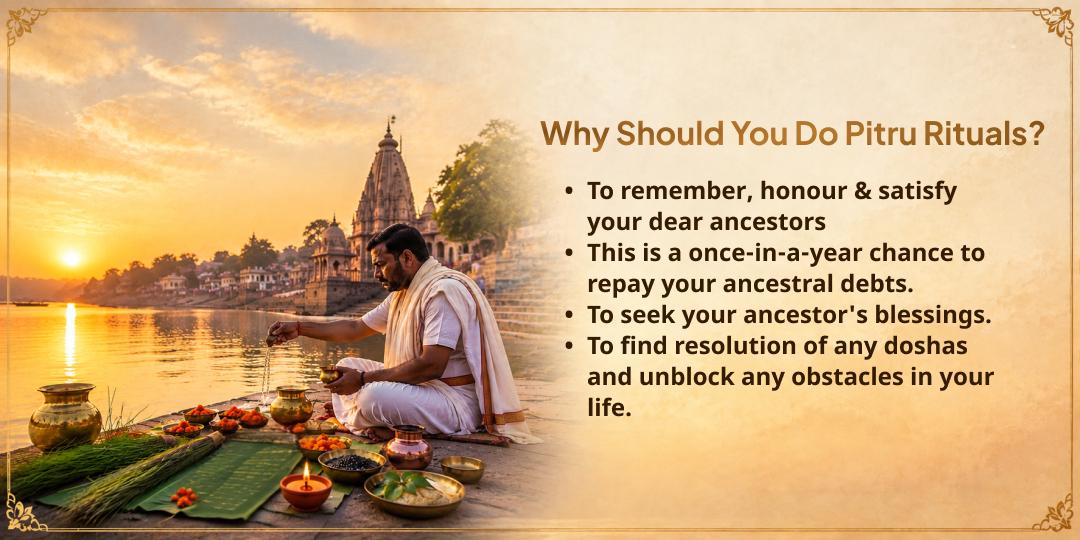
Every human being is born with five debts, among which Pitru Rin is considered the greatest. If it is not fulfilled through Shraadh and Tarpan during Pitru Paksha, it gradually takes the form of “Pitru Dosha.” To a greater or lesser extent, everyone carries some form of Pitru Rin in their life. However, in families that regularly perform Pitru rituals, this Dosha is believed to remain inactive. In families that have not performed Shraadh for several generations, this Dosha is believed to become more prominent.
Yes, absolutely. It is a major misconception that only men can perform Shraadh. The Ramayana provides an example: when Rama and Lakshmana went to collect the required materials, Mata Sita performed Pind Daan for King Dasharatha alone on the banks of the Phalgu River. This Shraadh was so powerful that Rama’s Sankalp letter became a witness. The verse “Ye ke chasmatkule jata aputta gotravighrahah” clearly indicates that even in the absence of a son, a daughter or any descendant can perform Shraadh.
Yes! Shraadh is not performed only for deceased parents - it can also be performed for grandparents, maternal grandparents, great-grandparents, and any departed ancestor of the family. Even if all three generations are alive, their ancestors (such as great-grandparents) may still be awaiting Shraadh. The Sankalp during Pitru Paksha is always made for “all the ancestors of the lineage.”