
 Download
 Share
ShareLathmar Holi: Unique Tradition of Barsana
Lathmar Holi of Barsana is one of the most fascinating and colorful Holi celebrations in India. Famous for its playful ritual where women hit men with sticks (lath), this unique tradition attracts thousands of devotees and tourists every year. Rooted in the divine legends of Radha and Lord Krishna, Lathmar Holi beautifully blends devotion, culture, and festive fun. Celebrated a few days before the main Holi festival, this grand event in the Braj region offers an unforgettable glimpse into India’s rich cultural heritage.
About Lathmar Holi
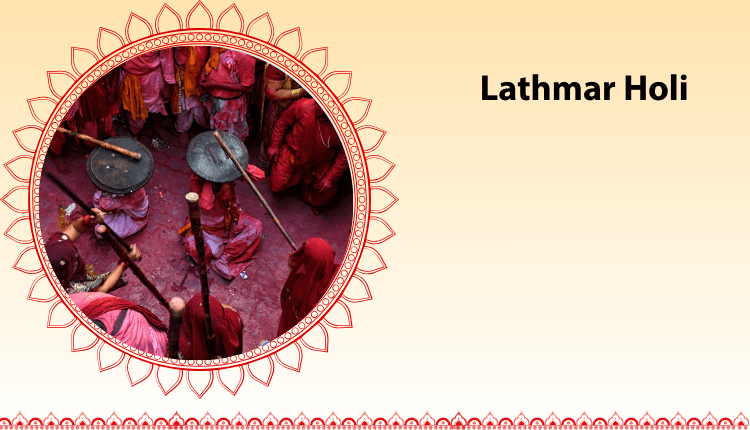
Lathmar Holi is a centuries-old tradition celebrated mainly in Barsana and nearby Nandgaon in Uttar Pradesh. The festival is deeply connected to the playful folklore of Lord Krishna visiting Radha’s village, where the women of Barsana chased him and his friends away with sticks. To recreate this divine leela, men from Nandgaon visit Barsana and are playfully welcomed by women wielding lath (sticks), while the men protect themselves with shields. The entire event takes place amid vibrant colors, traditional songs, and energetic dhol beats. The celebration usually begins days before Holi and includes temple festivities, cultural performances, and massive community participation. Thousands of visitors gather to witness this lively and symbolic event. Lathmar Holi represents playful love, community bonding, and the joyful spirit of Braj culture. More than just a spectacle, it reflects deep-rooted devotion and keeps alive the legendary romance of Radha and Krishna through generations.
Lathmar Holi: Unique Tradition of Barsana
Holi is one of the most joyful and colorful festivals of India. While it is celebrated across the country with colors, sweets, music, and laughter, one place stands out for its extraordinary and unique way of celebrating Holi — Barsana. The small town of Barsana becomes world-famous every year because of its special celebration known as Lathmar Holi. Lathmar Holi is not an ordinary Holi. It is a playful and traditional celebration where women hit men with sticks (called lathis), and men try to protect themselves with shields. This may sound surprising, but the event is full of fun, culture, and deep religious meaning. It attracts thousands of visitors from across India and around the world. In this article, we will explore the history, mea
Where is Barsana?
Barsana is a small town located in the Braj region of Uttar Pradesh. It is believed to be the birthplace of Radha, the beloved of Krishna. Because of this divine connection, Barsana holds great religious importance in Hindu culture. During the Holi season, this peaceful town transforms into a colorful and lively place filled with music, devotion, and excitement.
What is Lathmar Holi?
The word “Lathmar” comes from two Hindi words:
- Lath – stick
- Maar – to hit So, Lathmar Holi means “Holi where sticks are used.” In this celebration:
- Men from Nandgaon (Krishna’s village) visit Barsana
- Women of Barsana welcome them with sticks
- Men try to protect themselves using shields
- The entire event is playful and symbolic This tradition recreates a beautiful and playful story from the lives of Radha and Krishna.
The Mythological Story Behind Lathmar Holi
The origin of Lathmar Holi comes from the childhood story of Krishna and Radha. According to legend: Young Krishna, who lived in Nandgaon, used to visit Barsana to meet Radha. He would tease Radha and her friends (gopis) playfully. In response, Radha and her friends would chase Krishna away using sticks. This playful teasing between Krishna and the women of Barsana became a tradition. Over time, it turned into the grand Lathmar Holi celebration that we see today. This story shows:
- Love filled with fun
- Equal participation of men and women
- Joyful community bonding
How Lathmar Holi is Celebrated
1. Arrival of Men from Nandgaon
The celebration usually takes place a few days before the main Holi festival. Men from Nandgaon travel to Barsana in large groups. They carry:
- Flags
- Musical instruments
- Colors (gulal) They sing traditional Holi songs called “Hori” while entering Barsana.
2. Women Prepare for the Event
Women of Barsana dress in traditional attire, often wearing bright sarees and jewelry. They gather at the main temple area and prepare their lathis (sticks). The atmosphere becomes energetic and exciting.
3. The Playful Stick Ritual
When the men reach the temple courtyard, women begin the playful ritual. Women gently hit the men with sticks Men protect themselves using shields The crowd cheers and laughs Colors are thrown in the air This event is not violent. It is carefully managed and is symbolic of Radha’s playful anger towards Krishna.
4. Traditional Songs and Music
Throughout the event, local singers perform traditional Braj Holi songs. Drums (dhol) and other instruments create a festive mood.
The songs often describe:
- Krishna’s mischief
- Radha’s beauty
- Playful love stories
5. Temple Celebrations
The celebration mainly takes place near the famous Radha Rani Temple in Barsana. Devotees visit the temple, offer prayers, and take blessings before joining the festival.
Cultural Importance of Lathmar Holi
Lathmar Holi is not just entertainment. It carries deep cultural and spiritual meaning.
1. Celebration of Divine Love
The event represents the loving relationship between Radha and Krishna. It shows that love can be playful and joyful.
2. Women Empowerment Symbol
In Lathmar Holi:
- Women take the leading role
- Men accept the playful challenge
- Women’s strength and confidence are celebrated It shows respect for women’s participation in cultural traditions.
3. Preservation of Braj Culture
Lathmar Holi keeps the ancient Braj traditions alive. It helps younger generations understand:
- Mythological stories
- Traditional music
- Regional customs
4. Community Unity
People from different backgrounds come together to celebrate. The festival removes social barriers and promotes unity.
Why Tourists Love Lathmar Holi
Every year, thousands of tourists visit Barsana to experience this unique event. Visitors enjoy:
- Authentic Indian culture
- Traditional folk music
- Beautiful colorful scenes
- Spiritual atmosphere
- Unique photography opportunities Many foreigners describe it as one of the most exciting festivals in the world.
Safety and Organization
Though the celebration involves sticks, it is well-organized and monitored.
- Local authorities manage the crowd
- Participants follow traditional rules
- Medical teams are present
- The hitting is symbolic and controlled Safety remains an important priority.
Best Time to Experience Lathmar Holi
Lathmar Holi usually takes place about one week before the main Holi day, during the Phalguna month (February–March). If you plan to visit:
- Arrive early
- Wear old clothes
- Protect your camera and phone
- Follow local guidelines
Modern Changes in Lathmar Holi
In recent years: Eco-friendly colors are promoted
- Media coverage has increased
- Tourism facilities have improved
- Crowd control systems are better organized Even with modernization, the tradition remains authentic.
Spiritual Meaning Behind the Celebration
Beyond fun and excitement, Lathmar Holi has spiritual meaning. The sticks symbolize:
- Playful resistance
- Expression of love
- Breaking ego and pride The colors represent:
- Equality
- Joy
- Unity The entire celebration reminds people that life should be filled with laughter, love, and togetherness.
Conclusion
Lathmar Holi of Barsana is one of the most unique and fascinating traditions in India. Rooted in the divine love story of Radha and Krishna, it combines devotion, culture, music, and playful energy. This festival shows that spirituality does not always have to be serious—it can be joyful and colorful. The playful stick ritual, traditional songs, temple celebrations, and vibrant atmosphere make Lathmar Holi a truly unforgettable experience. If you ever wish to see Holi in its most traditional and grand form, Barsana is the perfect place. May the joyful spirit of Lathmar Holi fill your life with happiness, love, and bright colors. Radhe Radhe and Happy Holi!

Did you like this article?
Recommended
Read more
Holi Puja Vidhi Step-by-Step Guide
Perform Holi Puja 2026 correctly with this step-by-step guide. Know Holika Dahan muhurat, पूजा सामग्री, rituals, and the spiritual significance of Holi worship.

Holi in Mathura and Vrindavan
Experience Holi 2026 in Mathura and Vrindavan. Discover famous celebrations like Lathmar Holi, Phoolon ki Holi, temple rituals, and travel tips for the festival.
Difference Between Holi and Holika Dahan
Confused between Holi and Holika Dahan? Learn the key differences in date, rituals, meaning, and cultural importance of these two major Hindu festivals.