
 Download
 Share
ShareHistory of Holi Festival in India
Curious about the history of Holi in India? The festival of colors has deep mythological roots and a rich cultural legacy that dates back centuries. Celebrated with great enthusiasm across the country, Holi marks the victory of good over evil and the joyful arrival of spring. From ancient legends to royal celebrations and modern-day festivities, Holi has evolved into one of India’s most beloved festivals. This guide explores the fascinating origins, historical significance, and cultural journey of Holi.
About Holi
Holi is one of the oldest festivals in India, with references found in ancient Hindu texts and inscriptions. The most popular legend associated with Holi is the story of Prahlad and Holika. According to mythology, Prahlad’s unwavering devotion led to the destruction of the demoness Holika, symbolizing the eternal victory of truth and faith over evil. This event is commemorated through Holika Dahan, the ritual bonfire held on the eve of Holi. Historically, Holi was also celebrated in ancient royal courts and is mentioned in classical Sanskrit literature and temple carvings. Over time, the festival became a vibrant public celebration marked by colors, music, and community gatherings. In the Braj region of Uttar Pradesh—especially Mathura and Vrindavan—Holi holds special importance due to its association with Lord Krishna and Radha, where unique traditions like Lathmar Holi developed. Beyond its mythological and historical roots, Holi signifies the seasonal transition from winter to spring, renewal of relationships, and social harmony. Today, the festival is celebrated not only across India but also in many parts of the world, reflecting its universal message of joy, unity, and the triumph of positivity.
History of Holi Festival in India
Holi is one of the oldest and most joyful festivals celebrated in India. Known as the “Festival of Colors,” Holi brings people together in happiness, unity, and celebration. Every year, millions of people across India and around the world celebrate Holi with colors, music, sweets, and laughter. But Holi is not just about fun and colors. It has a deep history that goes back thousands of years. The festival has religious, cultural, and seasonal importance. In this article, we will explore the history of Holi in simple language and understand how it became one of India’s most loved festivals.
Ancient Origins of Holi
The history of Holi can be traced back to ancient India. References to Holi are found in old Hindu scriptures and texts written many centuries ago. Some of the earliest mentions of Holi appear in: Puranas (ancient Hindu religious texts) Sanskrit literature Old temple carvings and paintings Historians believe that Holi has been celebrated for more than 2,000 years. Over time, the festival has evolved, but its main message of victory of good over evil has remained the same.
The Legend of Prahlad and Holika
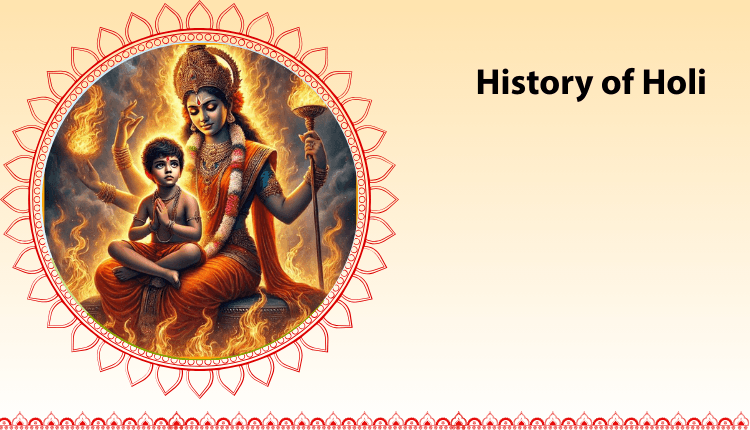
One of the most important stories connected to the history of Holi is the legend of Prahlad and Holika. Long ago, there was a powerful demon king named Hiranyakashipu. He wanted everyone to worship him as a god. However, his own son Prahlad was a great devotee of Lord Vishnu. Prahlad refused to worship his father and continued praying to Vishnu. Hiranyakashipu became very angry and tried many times to kill Prahlad. But every time, Prahlad was saved because of his strong faith. Finally, the king asked his sister Holika to help. Holika had a magical power that protected her from fire. She sat in a burning fire with Prahlad in her lap, thinking she would survive and Prahlad would burn. But due to Prahlad’s devotion, he was protected, and Holika burned instead. This event is remembered through the ritual of Holika Dahan, where people light a bonfire to symbolize the destruction of evil.
Connection with Lord Krishna
Another important part of Holi’s history is its connection with Lord Krishna. According to Hindu tradition, Lord Krishna used to celebrate Holi in Vrindavan and Mathura with Radha and the gopis. It is believed that Krishna playfully applied colors on Radha and others. This playful tradition became popular and turned into the colorful celebration we see today. Even today, places like Mathura, Vrindavan, and Barsana celebrate Holi with great enthusiasm. The famous Lathmar Holi of Barsana is inspired by stories of Krishna and Radha.
Holi in Ancient Literature and Art
Holi has been mentioned in many old texts and artworks. Ancient Sanskrit plays and poems describe people celebrating Holi with colors and music. Temple carvings from medieval India also show scenes of people spraying colored water using pichkaris (water guns). These historical pieces of evidence show that Holi has been celebrated for centuries. During the Mughal period, even some Mughal emperors participated in Holi celebrations. Historical records suggest that emperors like Akbar and Jahangir enjoyed playing Holi with their queens and court members. This shows that Holi was not limited to one community — it was celebrated widely across cultures.
Holi as a Spring Festival
Holi is also a seasonal festival. It marks the end of winter and the beginning of spring. In ancient agricultural societies, this time of year was very important. Farmers celebrated good harvests and prayed for prosperity. The bright colors of Holi represent blooming flowers and the beauty of spring. Nature itself looks colorful during this season, which may have inspired the tradition of playing with colors.
Regional Variations of Holi in India
India is a diverse country, and Holi is celebrated differently in various regions.
North India
Holi is celebrated with great energy in states like Uttar Pradesh, Rajasthan, and Punjab. Mathura and Vrindavan are especially famous for grand celebrations.
West Bengal
In West Bengal, Holi is known as “Dol Jatra” or “Basanta Utsav.” People sing devotional songs and celebrate in a more cultural style.
Maharashtra and Gujarat
In these states, people celebrate Holika Dahan with traditional rituals and play with colors the next day.
South India
In South India, Holi is celebrated on a smaller scale but still holds religious importance. Each region adds its own flavor to the festival.
Evolution of Holi Over Time
Over centuries, Holi has evolved from a purely religious festival to a cultural celebration. In earlier times: Natural colors made from flowers and herbs were used. Celebrations were mostly local and community-based. Today:
- Holi is celebrated globally.
- Large public events and music festivals are organized.
- Eco-friendly colors are promoted. The core meaning of the festival remains the same, but the style of celebration has changed with time.
Social Importance of Holi
Holi has always been a festival that breaks social barriers.
- In old times, it was one of the few occasions when:
- People from different castes and communities celebrated together.
- Social differences were temporarily forgotten.
- People forgave past misunderstandings. Even today, Holi promotes unity and friendship. People hug each other and say, “Bura na mano, Holi hai,” which means “Don’t mind, it’s Holi.”
Holi in Modern India
Today, Holi is one of the biggest festivals in India. Cities organize:
- Community Holika Dahan events
- Color festivals
- Cultural programs
- Music and dance celebrations Indian communities around the world also celebrate Holi in countries like the USA, UK, Canada, Australia, and more. The festival has become a symbol of Indian culture globally.
Spiritual Meaning in History
Throughout history, Holi has carried a strong spiritual message:
- Good always defeats evil.
- Faith and devotion are powerful.
- Love and unity are stronger than hatred.
- Life should be filled with color and joy. These values have helped Holi remain meaningful even after thousands of years.
Conclusion
The history of Holi in India is rich, ancient, and deeply meaningful. From the legend of Prahlad and Holika to the playful stories of Lord Krishna, Holi has grown from a religious ritual into a grand cultural celebration. For more than 2,000 years, people have gathered to light bonfires, play with colors, sing, dance, and share happiness. The festival marks the arrival of spring, the victory of good over evil, and the importance of unity. Holi is not just a festival of colors it is a celebration of life, love, and positivity. Its long history shows how traditions can grow and adapt while keeping their core values alive. As India continues to celebrate Holi every year, the spirit of this ancient festival remains as bright and colorful as ever.

Did you like this article?
Recommended
Read more
Holi Puja Vidhi Step-by-Step Guide
Perform Holi Puja 2026 correctly with this step-by-step guide. Know Holika Dahan muhurat, पूजा सामग्री, rituals, and the spiritual significance of Holi worship.

Holi in Mathura and Vrindavan
Experience Holi 2026 in Mathura and Vrindavan. Discover famous celebrations like Lathmar Holi, Phoolon ki Holi, temple rituals, and travel tips for the festival.
Difference Between Holi and Holika Dahan
Confused between Holi and Holika Dahan? Learn the key differences in date, rituals, meaning, and cultural importance of these two major Hindu festivals.