
 Download
 Share
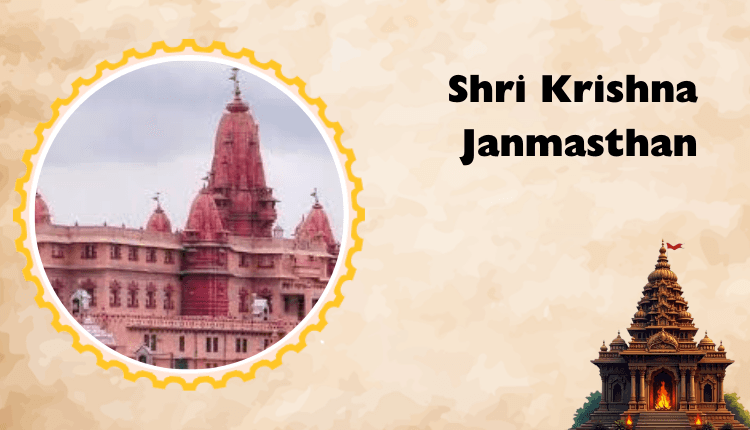
ShareShri Krishna Janmasthan Temple, Mathura
Planning to visit the sacred Shri Krishna Janmasthan Temple in Mathura? Discover its glorious history, darshan timings, puja rituals, must-visit temple areas, and the divine significance of Krishna’s birthplace. This holy site stands as one of India’s most important spiritual destinations, attracting millions of devotees seeking blessings, peace, and a deep devotional connection with Lord Krishna.
About Shri Krishna Janmasthan Temple
Shri Krishna Janmasthan Temple is one of the holiest pilgrimage sites for Hindus, located in Mathura—the birthplace of Lord Krishna. This sacred complex is built around the Garbh Griha, the exact spot believed to be Krishna’s birth during the Dvapara Yuga. The temple holds immense historical and spiritual significance, representing devotion, resilience, and cultural heritage. Visitors come here to experience divine peace, participate in daily aartis, and witness grand celebrations like Janmashtami. The temple complex includes several shrines, meditation halls, and sacred ponds that reflect the life and teachings of Lord Krishna. The serene atmosphere, powerful spiritual vibrations, and ancient legacy make Shri Krishna Janmasthan a must-visit destination for devotees seeking harmony, strength, and blessings in life.
Shri Krishna Janmasthan Temple, Mathura
The birthplace of Lord Shri Krishna in Mathura, Uttar Pradesh is today revered as a sacred temple. It is believed that this is the very prison cell where Lord Vishnu incarnated as the son of Mother Devaki. Around 5,132 years ago, on the Ashtami (eighth day) of Krishna Paksha in the month of Bhadrapada, Lord Shri Krishna was born inside a prison in Mathura. At that time, Mathura was ruled by King Kansa, who was also the brother of Krishna’s mother, Devaki. The exact place where Lord Krishna was born is today known as “Katra Keshavdev.” King Kansa feared that Devaki’s eighth son would kill him, as prophesied, so he killed all her previous children. Out of fear, he kept his own sister Devaki and her husband Vasudev imprisoned for years. Temple Construction and History Devotees of Lord Krishna are found not only in India but all over the world. The first magnificent temple at his birthplace was built in 1618 CE by King Veer Singh Bundela of Orchha. Later, Mughal emperor Aurangzeb demolished the temple and built a mosque in its place, which came to be known as the Shahi Eidgah Mosque. Years later, after the Battle of Govardhan, the Marathas took control of the Agra–Mathura region. They removed the mosque and once again rebuilt the Shri Krishna temple at the same site.
History of Shri Krishna Janmasthan Temple, Mathura
King Veer Singh Bundela constructed a grand temple for Lord Krishna. But many Hindu temples faced destruction during Mughal rule. Aurangzeb demolished the temple and built the Shahi Eidgah Mosque in its place. Many years later, in 1803, the British government declared the entire 13.37-acre Krishna Janmabhoomi land as government property and named it Katra Keshavdev. In 1815, the land was purchased by King Patnimal of Banaras, after which disputes arose between Hindu and Muslim groups. The Muslim side claimed ownership, but the court rejected their claim. In 1860, ownership was granted to King Patnimal’s successor, Raja Nar Singh Das. The dispute continued for years. In 1920, the court again ruled that the Muslim side had no ownership rights over the 13.37-acre land. In 1944, the entire land was officially registered in the name of Pandit Madan Mohan Malaviya and his two associates, with the financial support of J.K. Birla. Earlier in 1935, a mutual settlement related to the Eidgah mosque area had also taken place. On 21 February 1951, the Shri Krishna Janmabhoomi Trust was established, but it became inactive by 1958. The Muslim group’s case that year was also dismissed. Later, in 1977, the Shri Krishna Janmasthan Seva Sangh was formed, which eventually became a permanent organization.
Architecture of Shri Krishna Janmasthan Temple, Mathura
The Shri Krishna Janmasthan Temple is a famous and sacred Hindu temple known for its beauty and peaceful ambiance. Thousands of devotees visit every day.
- Representation of ancient traditions The temple’s construction reflects ancient Indian art and cultural heritage. The entire structure gives a sacred and serene feeling.
- Tall and magnificent dome The temple has a high, prominent dome that is visible from afar.
- Beautiful stone carvings The walls and pillars are adorned with intricate carvings depicting stories from Lord Krishna’s life.
- Sanctum Sanctorum (Garbha Griha) The most sacred area inside the temple holds the idols of Lord Krishna and Radharani, where devotees offer prayers and seek blessings.
- Clean and spacious premises The temple complex is open, clean, and surrounded by greenery with benches where people can sit and relax.
- Facilities for devotees Arrangements include drinking water, a prasadam area, and organized queues for darshan.
- Security arrangements Due to its importance, strong security measures are in place. During festivals, security is increased significantly. Devotees must deposit their belongings in the locker room outside the temple.
Timings of Shri Krishna Janmasthan Temple
Summer Timings
- Morning: 5:00 AM – 12:00 PM
- Evening: 4:00 PM – 9:30 PM
Winter Timings
- Morning: 5:30 AM – 12:00 PM
Evening: 3:00 PM – 8:30 PM
Prasad at Shri Krishna Janmasthan
At the Janmasthan temple, bhog is offered to the deity, but devotees do not offer personal prasad inside the main shrine. However, a free community meal (bhandara) is arranged, where devotees can partake in Krishna prasadam.
How to Reach Shri Krishna Janmasthan Temple, Mathura
People from all over the world visit Mathura to seek the blessings of Lord Krishna. Here’s how you can reach the temple: By Train Mathura Junction is well-connected to major Indian cities like Delhi, Agra, Lucknow, Jaipur, and Mumbai. The temple is just 2–3 km from Mathura Junction. You can hire an auto-rickshaw, e-rickshaw, or taxi from the station.
By Bus Regular State Transport (UPSRTC) and private buses operate to Mathura. Direct buses are available from Delhi, Agra, Vrindavan, and nearby towns. The bus stand is about 3 km from the temple, with easy access to autos and taxis.
By Air Mathura has no airport. The nearest airport is Agra Airport, about 60 km away.
The second option is Delhi’s Indira Gandhi International Airport, around 180 km away. From the airport, you can reach Mathura via taxi, train, or bus.

Did you like this article?
Recommended
Read more

Famous Temples in Varanasi
Discover famous temples in Varanasi you must visit in 2026. Explore history, significance, temple timings, and spiritual importance of Varanasi’s top temples.


Famous Shiva Temples in Chennai
Discover famous Shiva temples in Chennai you must visit in 2026. Explore history, significance, temple timings, and spiritual importance of Chennai’s top Shiva temples.

The Spiritual Heart of Pune
Discover the spiritual heart of Pune in 2026. Explore famous temples, ashrams, and sacred places that bring peace, devotion, and divine energy