
 Download
 Share
ShareGupt Navratri Kanya Puja
Gupt Navratri is a deeply spiritual and secret form of Navratri dedicated to Goddess Shakti. Many devotees often wonder whether Kanya Puja, a popular ritual during Chaitra and Sharad Navratri, is performed during Gupt Navratri or not. Since Gupt Navratri follows a different spiritual path focused on inner sadhana, tantra, and meditation, its rituals also differ. In this article, you will learn whether Kanya Puja is done during Gupt Navratri, the scriptural perspective, spiritual significance, accepted practices, and important rules every devotee should know.
About Gupt Navratri Kanya Puja
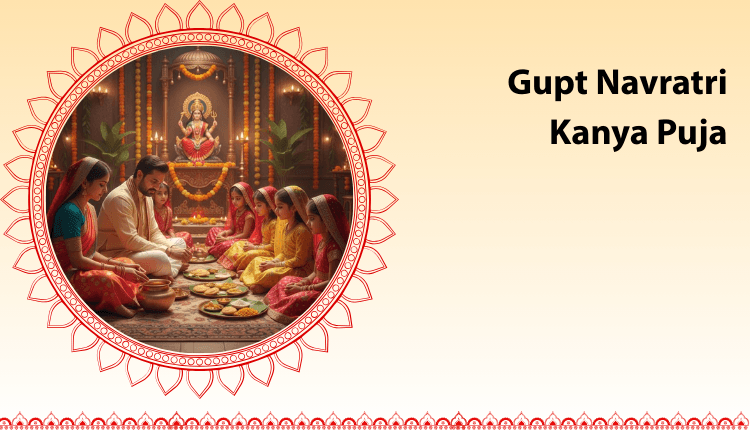
Kanya Puja is a sacred ritual in which young girls are worshipped as manifestations of Goddess Durga and her nine forms. It is commonly performed on Ashtami or Navami during Chaitra and Sharad Navratri. However, Gupt Navratri is observed in a completely different manner. Gupt Navratri emphasizes silent worship, mantra sadhana, tantric practices, and self-discipline, rather than outward rituals. Because of this, the tradition of Kanya Puja is not universally followed during Gupt Navratri.
Gupt Navratri Kanya Puja: Is It Done or Not
Gupt Navratri is a unique and secretive festival celebrated by devotees with great devotion and spiritual intensity. Unlike Chaitra or Sharad Navratri, Gupt Navratri is less known and is considered more mystical. One question that often arises during this festival is about Kanya Puja – whether it is performed or not during Gupt Navratri. In this article, we will explore this topic in detail, discussing the meaning of Kanya Puja, its traditional significance, and its role (or absence) in Gupt Navratri.
What is Gupt Navratri
Gupt Navratri, also called “Secret Navratri,” occurs twice a year, in Magh (January-February) and sometimes in Bhadrapad (August-September) according to the Hindu calendar. The word “Gupt” means secret or hidden. This Navratri is called secret because it is primarily observed for spiritual purposes, including personal growth, inner purification, and occult practices. Unlike other Navratris, which involve public rituals, fasting, and large gatherings, Gupt Navratri is mostly observed privately. Devotees focus on sadhana (spiritual practice), mantra chanting, meditation, and strict fasting. The festival is deeply rooted in Tantric traditions and is believed to bring both worldly and spiritual benefits to those who observe it sincerely.
What is Kanya Puja
Kanya Puja is a ritual performed during Navratri, especially on the eighth (Ashtami) or ninth (Navami) day of Sharad or Chaitra Navratri. In this ritual, young girls, called Kanyas, are worshipped as embodiments of Goddess Durga.
Key aspects of Kanya Puja include:
Worshipping young girls as goddesses – They are considered pure and divine, representing different forms of Durga.
Offering food and gifts – Devotees serve the girls with food like kheer (rice pudding), sweets, and sometimes fruits. Gifts like clothes or money are also given.
Spiritual significance – Kanya Puja is believed to remove negative energy and bring prosperity, health, and blessings to the household.
Timing – Traditionally, it is done on Ashtami or Navami of the main Navratri.
Kanya Puja is very popular in North India during Sharad Navratri and is usually a public or family celebration, with children invited from the neighborhood or relatives.
Is Kanya Puja Done During Gupt Navratri
This is the main question for devotees. The answer is: In most traditions, Kanya Puja is NOT performed during Gupt Navratri. Here’s why: Gupt Navratri is secretive – The primary focus of this Navratri is spiritual sadhana and mantra worship. It is considered a deeply personal and mystical festival. The rituals are meant to be done privately and often involve Tantric mantras, meditation, and internal worship, rather than external ceremonies like Kanya Puja.
No mention in classical texts – Ancient scriptures that describe Gupt Navratri rituals, such as the Devi Bhagavata Purana and Tantric texts, do not mention Kanya Puja as part of the observances.
Focus on spiritual purity – The purpose of Gupt Navratri is removing doshas, achieving mental clarity, and connecting with the Goddess internally. Performing Kanya Puja is an external ritual and is considered unnecessary in this context.
Different forms of worship – During Gupt Navratri, the focus is on worshipping the Nine Forms of Goddess Durga (Navadurga) through mantras, yantras, and meditation. Devotees may perform Homa (fire rituals), mantra jaap, or meditation, which are considered sufficient to gain the blessings of the Goddess.
Exceptions and Regional Practices
While the traditional guidance suggests Kanya Puja is not done during Gupt Navratri, some devotees may still perform it in a simplified way. These are usually personal choices rather than strict rules: Small Kanya Puja at home – Some people worship 1 or 2 young girls at home as a symbolic act of devotion.
Offering prasad to children – Instead of a full Kanya Puja, devotees may give food or sweets to children quietly as part of spiritual merit.
Local customs – In some regions, local traditions may include minor Kanya Puja rituals during Gupt Navratri, but these are rare.
The main point is that the traditional or classical form of Kanya Puja is not part of Gupt Navratri, unlike Sharad or Chaitra Navratri.
Why Kanya Puja is Skipped in Gupt Navratri
Secrecy and Intensity – Gupt Navratri is about silent devotion and hidden spiritual practice. Large-scale rituals like Kanya Puja contradict this secretive nature.
Tantric focus – Gupt Navratri involves Tantric practices, mantra recitation, and meditation, which are considered more effective for spiritual advancement than external rituals.
Timing and purpose – Kanya Puja is traditionally associated with public worship during festival days. Gupt Navratri, however, is not celebrated publicly.
What Should Be Done During Gupt Navratri Instead of Kanya Puja
If you want to observe Gupt Navratri properly, here’s what you should do: Fasting – Many devotees observe a strict fast for all nine days. Some may take only fruits and milk, while others follow a more lenient diet.
Mantra Chanting – Reciting the Navadurga mantras or specific Tantric mantras daily is considered very powerful.
Meditation – Devotees meditate on the Goddess in the morning and evening to increase spiritual energy and mental clarity.
Homa or Fire Rituals – Some perform small homas for removal of obstacles, protection, and prosperity.
Reading Scriptures – Reading holy texts like the Devi Bhagavatam or Durga Saptashati enhances spiritual benefits.
Charity and Seva – Donating food, clothes, or money quietly during Gupt Navratri is highly meritorious.
Spiritual Significance of Not Doing Kanya Puja in Gupt Navratri
Skipping Kanya Puja in Gupt Navratri does not mean you are missing out on blessings. On the contrary, the internal sadhana, meditation, and mantra recitation are considered more potent than external rituals. The Goddess is believed to be pleased with sincere devotion and secret worship, rather than public display. The spiritual benefits include:
-
Removal of negative energies and doshas
-
Protection from enemies and obstacles
-
Mental peace and clarity of thought
-
Strengthening of inner power and self-confidence
-
Enhancement of spiritual growth and intuition
Conclusion
To answer the question clearly: Kanya Puja is traditionally NOT done during Gupt Navratri. Gupt Navratri is a secretive, spiritual festival focused on internal worship, meditation, mantra recitation, and personal sadhana. Unlike Chaitra or Sharad Navratri, which involve Kanya Puja as a central ritual, Gupt Navratri emphasizes hidden, mystical practices. However, devotees can always perform symbolic acts of kindness, such as giving food or helping children, as a form of devotion. The true essence of Gupt Navratri lies in silence, devotion, and spiritual discipline, which brings more profound blessings than external rituals like Kanya Puja.

Did you like this article?
Recommended
Read more
Holi Puja Vidhi Step-by-Step Guide
Perform Holi Puja 2026 correctly with this step-by-step guide. Know Holika Dahan muhurat, पूजा सामग्री, rituals, and the spiritual significance of Holi worship.

Holi in Mathura and Vrindavan
Experience Holi 2026 in Mathura and Vrindavan. Discover famous celebrations like Lathmar Holi, Phoolon ki Holi, temple rituals, and travel tips for the festival.
Difference Between Holi and Holika Dahan
Confused between Holi and Holika Dahan? Learn the key differences in date, rituals, meaning, and cultural importance of these two major Hindu festivals.