
 Download
 Share
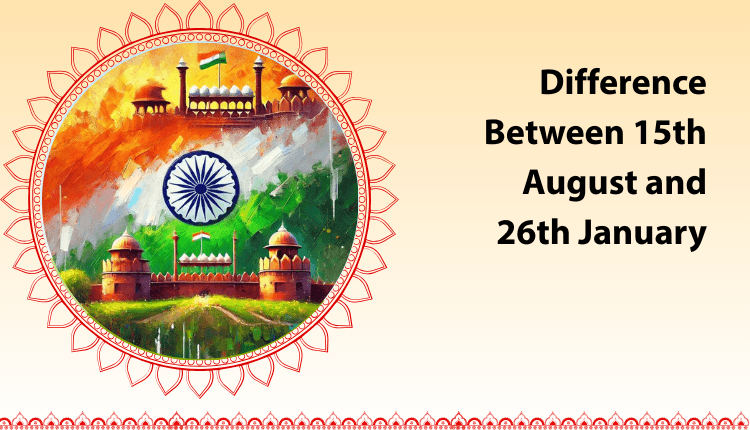
ShareDifference Between 15th August and 26th January
Many people celebrate 15th August and 26th January with equal pride, yet the difference between 15th August and 26th January holds deep historical and constitutional meaning. While both are national festivals of India, they mark two distinct milestones in the country’s journey—freedom from British rule and the adoption of the Indian Constitution. Understanding their significance helps us appreciate India’s struggle, sacrifices, and democratic foundation.
About 15th August and 26th January
15th August and 26th January are the two most important national days of India, symbolizing freedom and governance. Though both are celebrated with patriotism, cultural programs, and national pride, their purpose and historical background are different. 15th August, celebrated as Independence Day, marks the end of British colonial rule in 1947. It represents the victory of India’s freedom movement and honors the sacrifices of countless freedom fighters who laid down their lives for the nation. 26th January, celebrated as Republic Day, commemorates the day in 1950 when the Constitution of India came into effect. This day signifies India becoming a sovereign, democratic republic where the power lies with its people. Together, these days reflect India’s transition from colonial rule to a self-governed democratic nation.
Difference Between 15th August and 26th January
India is a country with a rich history, great culture, and strong democratic values. Two of the most important national festivals of India are 15th August (Independence Day) and 26th January (Republic Day). Both days are celebrated with great pride, patriotism, and respect across the country. Although both are national holidays and symbolize freedom and unity, they have different historical meanings, purposes, and forms of celebration. This article explains the difference between 15th August and 26th January in simple English, covering their history, significance, celebrations, and importance in modern India.
Meaning of 15th August – Independence Day
15th August is celebrated as Independence Day in India. On this day in 1947, India got freedom from British rule after nearly 200 years of colonial domination. For a long time, Indians suffered under foreign rule. Many freedom fighters like Mahatma Gandhi, Jawaharlal Nehru, Subhas Chandra Bose, Bhagat Singh, Rani Lakshmibai, and many others sacrificed their lives so that India could become free. Their struggle, courage, and unity finally led to independence on 15th August 1947.
Why 15th August is Important
- It marks the end of British rule
- It represents freedom, sacrifice, and struggle
- It reminds citizens of the price paid for independence
- It shows the birth of free India On this day, India became a free nation, but it did not yet have its own permanent constitution.
Meaning of 26th January – Republic Day
26th January is celebrated as Republic Day in India. On this day in 1950, the Constitution of India came into force, and India officially became a republic. Although India became independent in 1947, it was still following some laws made by the British. After independence, Indian leaders and constitutional experts worked hard to create a constitution that reflected the values, traditions, and needs of the Indian people. This constitution was adopted on 26th November 1949 and came into effect on 26th January 1950.
Why 26th January is Important
- It marks the birth of the Indian Republic
- It shows that India is governed by its own constitution
- It establishes democracy, justice, liberty, equality, and fraternity
- It gives citizens fundamental rights and duties
On this day, India became a country where the people are supreme, and laws are made by their representatives.
Historical Difference Between 15th August and 26th January
The main historical difference between the two days is: 15th August 1947: India became free from foreign rule 26th January 1950: India started governing itself under its own constitution In simple words, 15th August gave India freedom, while 26th January gave India a system to run the country.
Difference in Purpose
Purpose of Independence Day (15th August)
- To celebrate freedom from British rule
- To honor freedom fighters
- To remember the struggle for independence
- To inspire patriotism among citizens
Purpose of Republic Day (26th January)
- To celebrate the Constitution of India
- To honor democracy and rule of law
- To show the strength of Indian institutions
- To remind citizens of their rights and duties
Difference in National Celebrations
Celebrations on 15th August
- The Prime Minister hoists the national flag at Red Fort, Delhi
- The Prime Minister gives a speech to the nation
- Schools and colleges organize flag hoisting, cultural programs, and speeches
- Patriotic songs are sung
- People decorate homes with tricolor flags
- Kite flying is popular in many states
The focus of Independence Day is on freedom, history, and national unity.
Celebrations on 26th January
- The President of India unfurls the national flag
- A grand Republic Day Parade is held at Kartavya Path (Rajpath), New Delhi The parade shows:
- India’s military strength
- Cultural diversity through state tableaux
- Achievements in science, technology, and defense
- Gallantry awards like Param Vir Chakra and Ashoka Chakra are given
- School children participate in cultural performances The focus of Republic Day is on democracy, constitution, and national power.
Difference in Symbolism
15th August symbolizes:
- Freedom
- Sacrifice
- End of colonial rule
- Unity in struggle
26th January symbolizes:
- Democracy
- Rule of law
- Equality
- Power of the constitution
Difference in Emotional Meaning
For many Indians:
- 15th August is emotional because it reminds people of the pain, struggle, and sacrifices of freedom fighters.
- 26th January is proud and powerful because it shows how India stands strong as a democratic republic.
Importance for Students and Citizens
Importance of 15th August
- Teaches the value of freedom
- Encourages respect for freedom fighters
- Inspires youth to serve the nation
- Reminds people not to take freedom for granted Importance of 26th January
- Teaches respect for the constitution
- Makes citizens aware of fundamental rights
- Encourages responsible citizenship
- Strengthens faith in democracy
Role in Modern India
In today’s India:
- 15th August inspires people to work for a better, stronger, and united nation
- 26th January reminds people to follow laws, values, and duties Both days together shape India’s identity as a free and democratic country.
Similarities Between 15th August and 26th January
Although they are different, both days share some similarities:
- Both are national holidays
- Both are celebrated across the country
- Both promote patriotism and unity
- The national flag is hoisted on both days
- Cultural programs are organized nationwide
Conclusion
In conclusion, 15th August and 26th January are two pillars of India’s national identity. While 15th August celebrates freedom from British rule, 26th January celebrates the power of the Constitution and democracy. Independence Day reminds us how India became free, and Republic Day reminds us how India governs itself. Both days teach important lessons about sacrifice, responsibility, unity, and national pride. As citizens of India, it is our duty to respect these days, understand their meaning, and work together to make India a peaceful, strong, and developed nation. Freedom and democracy are not just gifts—they are responsibilities. By honoring both 15th August and 26th January, we honor the spirit of India itself.

Did you like this article?
Recommended
Read more
Holi Puja Vidhi Step-by-Step Guide
Perform Holi Puja 2026 correctly with this step-by-step guide. Know Holika Dahan muhurat, पूजा सामग्री, rituals, and the spiritual significance of Holi worship.

Holi in Mathura and Vrindavan
Experience Holi 2026 in Mathura and Vrindavan. Discover famous celebrations like Lathmar Holi, Phoolon ki Holi, temple rituals, and travel tips for the festival.
Difference Between Holi and Holika Dahan
Confused between Holi and Holika Dahan? Learn the key differences in date, rituals, meaning, and cultural importance of these two major Hindu festivals.