
 Download
 Share
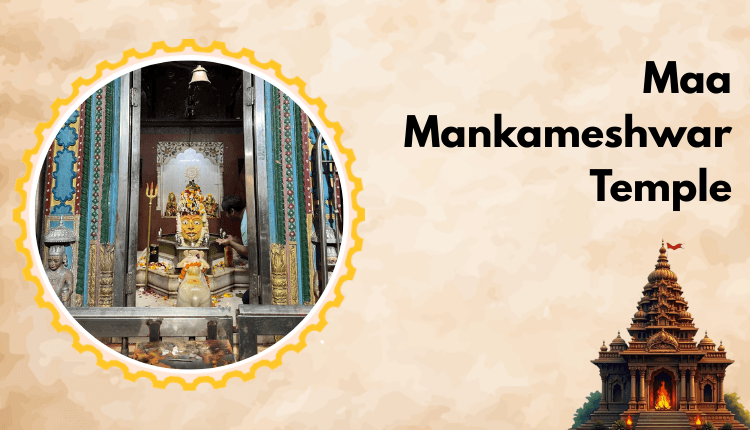
ShareMaa Mankameshwar Temple Agra
Planning to visit Maa Mankameshwar Temple in Agra? Here you’ll discover the temple’s ancient history, its spiritual significance, daily darshan timings, architectural beauty, and the complete puja rituals that every devotee should know before visiting.
About Maa Mankameshwar Temple, Agra
Maa Mankameshwar Temple in Agra is one of the oldest and most revered temples dedicated to Lord Shiva. Located near the iconic Agra Fort, this sacred temple is believed to fulfill the wishes (manka ki iccha) of devotees, which is why it is known as Mankameshwar. The temple holds deep spiritual significance as the Shivling here is said to be Swayambhu (self-manifested) and thousands of devotees visit throughout the year, especially during Mondays, Shravan month, and Maha Shivratri. The temple’s peaceful atmosphere, ancient architecture, and divine energy make it a major spiritual attraction in Agra. Devotees perform simple yet powerful rituals such as Abhishek, Rudrabhishek, and Jalabhishek to seek blessings of health, prosperity, and wish fulfillment. The temple also carries an interesting legend associated with Bal Krishna, adding historical and mythological importance to it. A visit to Maa Mankameshwar Temple offers an experience of serenity, devotion, and deep spiritual connection, making it a must-visit holy site for anyone visiting Agra.
Maa Mankameshwar Temple, Agra – History, Architecture, Timings, Legends & Complete Guide
Maa Mankameshwar Temple, located in the heart of Agra, Uttar Pradesh, is one of the most revered and ancient Hindu pilgrimage sites. Although the temple is dedicated to Lord Shiva, its name—Maa Mankameshwar—often leads people to associate it with Devi worship as well. Devotees firmly believe that any wish (manokamna) made here with a pure heart is fulfilled.
History of Maa Mankameshwar Temple, Agra
Maa Mankameshwar Temple is considered one of the oldest and most respected temples in Agra. Situated in the historic locality of Rawatpada, the temple’s origins are believed to date back to hundreds of years. As per legends, the Shivling enshrined here is a Swayambhu (self-manifested) Shivling, established by Lord Shiva Himself during the Dwapara Yuga
The Divine Legend of Lord Shiva
According to the ancient tale: When Lord Krishna was born in Mathura, Lord Shiva wished to see Baby Krishna in His infant form.
Leaving Mount Kailash, Shiva travelled toward Gokul.
On the way, He stopped at Rawatpada (the present temple site) and meditated overnight.
Lord Shiva took a vow that if He could hold Baby Krishna in His arms, He would return to the same spot and install a Shivling.
The Moment of Blessing When Shiva reached Gokul: Mother Yashoda initially hesitated due to Shiva's ash-smeared, dreadlocked appearance.
Shiva sat under a sacred banyan tree and meditated peacefully.
Baby Krishna, however, started pointing toward Shiva and cried for Him.
Yashoda finally invited Shiva inside and placed Baby Krishna in His arms.
As soon as Krishna touched Shiva, He became calm and joyful.
Establishment of the Shivling Delighted by this divine moment: Shiva returned to the spot where He had meditated.
He established the Mankameshwar Shivling there.
He blessed the place saying: “Just as my wish was fulfilled here, the wishes of all true devotees will also be fulfilled.”
Architecture of Maa Mankameshwar Temple
The temple beautifully blends simplicity, spirituality, and ancient Hindu architectural style. Shikhara (Upper Dome Area) Built in the traditional Nagara style of North India.
Tall and dome-shaped, symbolizing ascension toward the divine.
Garbha Griha (Sanctum Sanctorum) Houses the silver-covered Swayambhu Shivling.
Thick walls keep the inner chamber cool and serene.
Entry to the sanctum is allowed only in traditional Indian attire.
Entrance & Mandap The main entrance is crafted with intricately carved stones.
A spacious mandap (hall) welcomes devotees for meditation and worship.
Walls display beautiful carvings of Shiva-Parvati, Nandi, and other deities.
Temple Complex Highlights Several smaller shrines dedicated to various deities surround the sanctum.
A large sacred banyan tree marks the place where Shiva meditated.
11 eternal lamps (Akhanda Jyotis) burn continuously with pure ghee.
The temple maintains an ancient charm without modern modifications.
Temple Timings
Morning: 5:00 AM
Afternoon Break: 12:00 PM – 4:00 PM
Evening: 4:00 PM – 9:00 PM
Aarti Timings Morning Aarti: Around 5:30 AM
Evening Aarti: Around 7:30 PM
Special Festival Timings
During festivals like Sawan, Mahashivratri, and Pradosh Vrat, the temple remains open till late night. Special rituals such as Jalabhishek and Rudrabhishek are performed.
Prasad at Maa Mankameshwar Temple
Prasad here symbolizes purity, devotion, and divine blessing. Main Offerings
-
Panchamrit A sacred mixture of milk, curd, ghee, honey, and sugar, used for Shivling Abhishek and later distributed as prasad.
-
Belpatra & Fruits Bel leaves, coconut, and fruits offered during worship are shared among devotees afterward.
-
Sweets Devotees buy batasha, ladoos, peda, and panchmeva from nearby shops.
These are offered to Lord Shiva and later given as prasad.
Deep Daan Prasad A special custom here: when a devotee’s wish is fulfilled, they light a ghee lamp.
Prasad such as til ke laddoo or gur-chana is distributed afterward.
Large-Scale Distribution During Sawan and Shivratri: Huge bhandaras serve sattvic meals like khichdi, halwa, poori-sabzi.
Devotees perform deep daan ranging from ₹1.25 to ₹1.25 lakh.
Everything is prepared in a clean, satvik manner with utmost devotion.
How to Reach Maa Mankameshwar Temple, Agra
The temple is located in Rawatpada, near the banks of the Yamuna River, in the old part of Agra. From Agra Fort Railway Station The nearest railway station.
You can walk or take an auto-rickshaw to the temple.
The distance is very short and easily reachable within minutes.
From Bijli Ghar A well-known landmark in Agra.
The temple is easily accessible on foot from here.
The lanes are narrow but manageable.
Other Transport Options Autos, e-rickshaws, taxis, and two-wheelers can reach near the temple area.
The route passes through traditional markets, reflecting the charm of old Agra.
Special Celebrations During Sawan
The Sawan month transforms the temple into a major spiritual hub: Massive crowds gather for Jalabhishek and Rudrabhishek.
On Sawan Mondays, Pradosh Vrat, and festivals, the temple is filled beyond capacity.
Lakhs of devotees visit during major events like Kumbh, Ardh-Kumbh, and Magh Mela.
Major Highlights of Maa Mankameshwar Temple
Located in Agra’s historic Rawali area along the Yamuna River.
Home to a silver-covered Swayambhu Shivling.
Believed to be established by Lord Krishna Himself during the Mahabharata era.
One of the most crowded temples during Sawan and Shivratri.
Only devotees in traditional Indian attire can approach the Shivling directly.
Eleven eternal ghee lamps burn continuously.
Devotees light lamps when their wishes are fulfilled.
Peaceful, divine, and spiritually energizing environment.

Did you like this article?
Recommended
Read more

Famous Temples in Varanasi
Discover famous temples in Varanasi you must visit in 2026. Explore history, significance, temple timings, and spiritual importance of Varanasi’s top temples.


Famous Shiva Temples in Chennai
Discover famous Shiva temples in Chennai you must visit in 2026. Explore history, significance, temple timings, and spiritual importance of Chennai’s top Shiva temples.

The Spiritual Heart of Pune
Discover the spiritual heart of Pune in 2026. Explore famous temples, ashrams, and sacred places that bring peace, devotion, and divine energy