
 Download
 Share
ShareMaa Mangla Bhawani Temple Ballia
Planning to visit Maa Mangla Bhawani Temple in Ballia? Explore its divine history, powerful rituals, darshan timings, significance, and everything a devotee must know before visiting.
About Maa Mangla Bhawani Temple
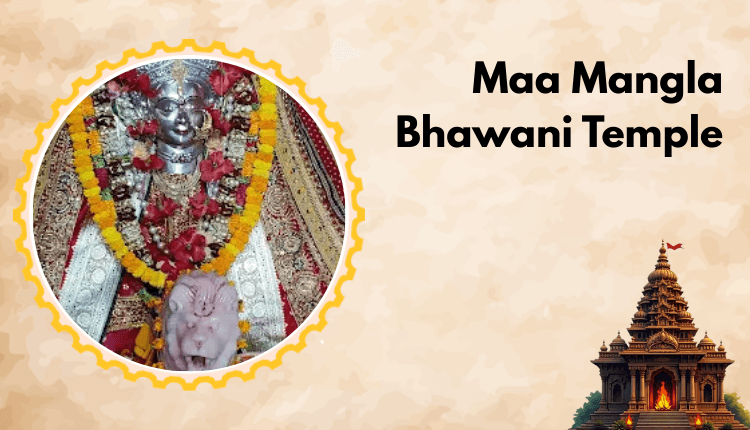
Maa Mangla Bhawani Temple is one of the most sacred and ancient Shakti Peeth–style shrines located in Ballia, Uttar Pradesh. Dedicated to Goddess Mangla Bhawani, this temple is a strong spiritual center where thousands of devotees come every day to seek blessings for peace, prosperity, protection, and strength. The temple is known for its deep historical roots and divine energy that devotees feel as soon as they enter the premises. Maa Mangla Bhawani is worshipped as the protector of families, remover of obstacles, and goddess of power and purity. People visit the temple to offer prayers, perform special puja, and seek blessings for good health, success, marriage, and fulfillment of wishes. The soothing environment, spiritual vibrations, and ancient traditions make this temple a truly sacred experience. The temple also hosts grand celebrations during Navratri, when thousands gather for darshan, aarti, and festive rituals. The vibrant cultural significance and the powerful presence of Maa Mangla Bhawani make this temple a must-visit for every devotee seeking divine blessings and inner peace.
Maa Mangla Bhawani Temple, Ballia
The Ballia district of Uttar Pradesh is not only known for its historic significance and contribution to India’s freedom struggle but is also a center of religious and cultural heritage. The district is home to numerous temples and sacred sites that draw thousands of devotees. Among these revered places, the Maa Mangla Bhawani Temple holds special importance. Every day, a large number of devotees visit the temple, and during special occasions, the place almost turns into a fair. Let’s explore the history, architecture, timings, prasad, and travel information related to Maa Mangla Bhawani Temple in Ballia.
History of Maa Mangla Bhawani Temple, Ballia
The history of Maa Mangla Bhawani Temple is ancient and glorious. It is believed that the temple was established in the 7th or 8th century. Maa Mangla Bhawani is worshipped as an incarnation of Shakti, resembling forms of Durga, Kali, and Annapurna. According to local legends, this place symbolizes a form of Ashtabhuja Mata, and the goddess is believed to have manifested here on her own. Many believe that Maa Mangla Bhawani established herself at this spot to protect the region from calamities. Historians state that the temple has been renovated several times by local kings and devotees. During the freedom struggle, the temple served as a spiritual refuge for Ballia’s revolutionaries. Because of this, the temple holds both religious and historical importance.
Architecture of Maa Mangla Bhawani Temple
The architecture of Maa Mangla Bhawani Temple reflects the traditional North Indian Nagara style. The sanctum (garbhagriha) is serene and beautifully designed. The idol of the goddess is in an eight-armed form (Ashtabhuja), symbolizing power, courage, and compassion. The temple’s shikhara (spire) is tall and crowned with a kalash, making the temple visible from a distance. The walls and pillars are adorned with carvings of various deities, showcasing the exceptional craftsmanship of local artisans. The temple complex also includes a yajna-shala, a small water kund, and a resting area for visitors. During festivals, the temple is decorated with flowers, lights, and colorful ornaments, enhancing its beauty. The decoration during Navratri is especially captivating.
Timings of Maa Mangla Bhawani Temple
The temple remains open throughout the year. The timings are: Morning Darshan: From 5:00 AM
Night Aarti & Closing: Until 9:00 PM
Special pujas are conducted every Tuesday and Saturday. On occasions like Navratri, Chaitra and Sharadiya Durga Puja, Vasant Panchami, Magh Purnima, and Kali Puja, thousands of devotees gather here. Daily morning and evening aarti is a divine experience. Rituals such as Durga Saptashati Path, Chandi Path, Havan, and Rudrabhishek are also performed regularly.
Prasad at Maa Mangla Bhawani Temple
The prasad offered at the temple is considered highly sacred. Devotees offer various items, including: Bangles and Vermilion (Sindoor): Married women offer these for the long life and well-being of their husbands.
Red Chunari and Coconut: Especially offered during Navratri.
Bhog Items: Laddus, batasha, fruits, flowers, and dry fruits, which are later distributed among devotees.
Panchamrit and Kheer: Offered on special festivals.
During major festivals, the temple committee also organizes bhandaras, where hundreds of devotees partake in free prasad meals.
How to Reach Maa Mangla Bhawani Temple, Ballia
- By Train Ballia Railway Station, a major station of the North Eastern Railway, is well connected to big cities like Lucknow, Varanasi, Delhi, Howrah, and Patna. The temple is approximately 4–5 km from the station. Auto-rickshaws, cycle-rickshaws, and taxis are easily available. Train travel is ideal for visitors coming from distant states.
- By Bus Ballia Bus Stand, operated by UPSRTC, offers regular bus services to Lucknow, Gorakhpur, Azamgarh, Patna, and Varanasi. The temple is around 2–3 km from the bus stand. From there, local autos, e-rickshaws, or taxis can take you to the temple easily. Road travel is best for visitors coming from nearby districts or traveling by personal vehicle.
- By Air Ballia currently has no airport. The nearest airport is Lal Bahadur Shastri International Airport, Varanasi, located about 130 km away. The airport is well connected to major cities such as Delhi, Mumbai, Kolkata, and Bengaluru. From the airport, you can take a taxi or bus to reach Ballia. After reaching Ballia, local transport options make it easy to reach the temple. Air travel is ideal for devotees coming from far-off states or metropolitan cities.
Conclusion
The Maa Mangla Bhawani Temple in Ballia is a symbol of devotion, spirituality, and divine energy. For the locals, it is also a hub of cultural and social activities. If you are planning a visit to Ballia, this sacred temple must definitely be a part of your itinerary.

Did you like this article?
Recommended
Read more

Famous Temples in Varanasi
Discover famous temples in Varanasi you must visit in 2026. Explore history, significance, temple timings, and spiritual importance of Varanasi’s top temples.


Famous Shiva Temples in Chennai
Discover famous Shiva temples in Chennai you must visit in 2026. Explore history, significance, temple timings, and spiritual importance of Chennai’s top Shiva temples.

The Spiritual Heart of Pune
Discover the spiritual heart of Pune in 2026. Explore famous temples, ashrams, and sacred places that bring peace, devotion, and divine energy