
 Download
 Share
ShareDukhharan Nath Temple, Gonda
Planning a visit to Dukhharan Nath Temple in Gonda? Explore the temple’s rich history, the significance of its deity, step-by-step puja rituals, and the spiritual benefits devotees gain from visiting this sacred place.
About Dukhharan Nath Temple
Dukhharan Nath Temple is one of the most revered temples in Gonda, attracting devotees from across the region. Dedicated to Lord Shiva, the temple is believed to fulfill wishes, bring peace, and remove obstacles from the lives of its visitors. The temple’s rituals, including daily aarti and special pujas, are observed with deep faith and devotion. Visiting this temple is considered spiritually uplifting, helping devotees feel calm, focused, and more connected to their inner self. The temple’s serene environment, combined with its rich history, makes it an important spiritual destination in Uttar Pradesh.
Know About Gonda’s Dukhharan Nath Temple
Located in the heart of Gonda city in Uttar Pradesh, the Dukhharan Nath Temple is an ancient and spiritually significant shrine believed to date back to the Treta Yuga. A grand fair is organized here during the Kajari Teej festival, where thousands of devotees participate. The temple’s architecture features a main fort-like wall and two smaller walls on each side, adding to its grandeur.
History of Dukhharan Nath Temple, Gonda
The Dukhharan Nath Temple is considered one of the oldest and most revered Shiva temples, with its origins linked to the Ramayana era. According to legend, when Lord Shri Ram was born in Ayodhya, Lord Shiva visited the city to see his beloved devotee. While returning, Shiva rested at the spot where the temple stands today in Gonda. It is said that sometime later, Lord Ram became sad for certain reasons. Knowing this, Lord Shiva once again went to Ayodhya and gave him darshan, bringing joy to Ram. Since Lord Shiva removed Ram’s sorrow, the place came to be known as Dukhharan Nath—the one who removes sorrow. Even today, this temple is considered a symbol of devotion to both Lord Shiva and Lord Ram. Devotees from far-off places visit to offer prayers and experience the spiritual bond associated with this sacred legend.
Architecture of Dukhharan Nath Temple, Gonda
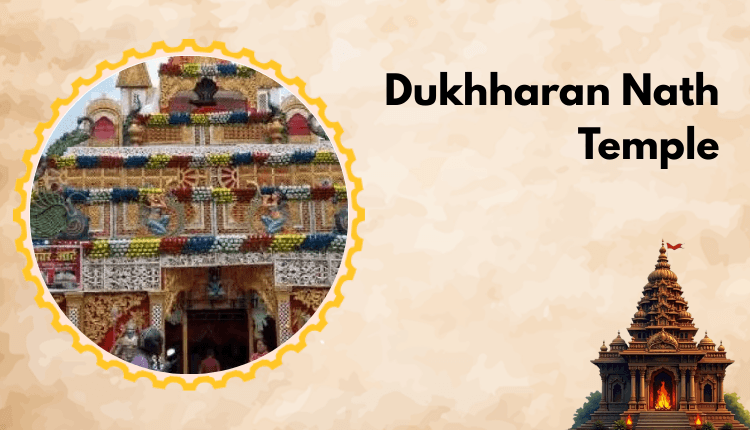
The temple is not only a divine center but also an architectural attraction. Built in the traditional Nagara style of North Indian temple architecture, the temple features a high, artistically carved shikhara (spire) visible from a distance. The trident (trishul) and flag atop the shikhara symbolize Shiva’s divine power. Inside, the sanctum sanctorum (garbhagriha) is peaceful and ideal for meditation, where the sacred Shivling is installed. The entrance and walls display beautiful carvings of religious figures and motifs. Marble and stone have been used extensively in the temple complex, keeping the environment naturally cool, even in summer. The surrounding area is open and green, enhancing the spiritual experience for visitors. This temple showcases a harmonious blend of architecture, devotion, and cultural heritage
Timings of Dukhharan Nath Temple, Gonda
The temple opens at 5:00 AM and remains open until 9:00 PM. Daily morning and evening aarti are performed regularly. On special occasions such as Shravan Mondays, Maha Shivaratri, and Pradosh Vrat, the temple remains open for extended hours. The best time for darshan and worship is during the morning and evening aarti. The temple strictly follows its schedule to ensure a convenient experience for devotees.
Prasad at Dukhharan Nath Temple, Gonda
After performing rituals and offering prayers, devotees present items such as bel-patra, flowers, incense, coconut, and sweets. There is a tradition of performing abhishek of the Shivling with water, milk, and Ganga jal, followed by offering fruits, sweets, and other items. The temple management distributes prasad to devotees, which usually includes flattened rice (chuda), jaggery, batasha, coconut, and a mixed dry-fruit offering (panchmeva). On major festivals like Mahashivratri, Shravan Mondays, and Pradosh Vrat, large-scale distribution of mahaprasad takes place.
How to Reach Dukhharan Nath Temple, Gonda
By Train Gonda Junction Railway Station (GON) is a major station in Uttar Pradesh, well connected to cities like Delhi, Lucknow, Varanasi, Kanpur, and Patna. The temple is located about 2–3 km from the railway station. You can hire an auto-rickshaw, tempo, or taxi to reach the temple easily. By Bus Gonda’s Roadways Bus Station, operated by UPSRTC, connects the city with Lucknow, Ayodhya (Faizabad), Balrampur, Bahraich, Gorakhpur, and other nearby cities. The temple is situated on Station Road and is not far from the bus stand. You can reach it by auto, rickshaw, or even on foot. By Air Gonda does not have its own airport. The nearest airport is Chaudhary Charan Singh International Airport, Lucknow (LKO), located approximately 100 km away. From the airport, you can take a taxi, Ola/Uber, or state transport buses to reach Gonda and then travel to the temple.

Did you like this article?
Recommended
Read more

Famous Temples in Varanasi
Discover famous temples in Varanasi you must visit in 2026. Explore history, significance, temple timings, and spiritual importance of Varanasi’s top temples.


Famous Shiva Temples in Chennai
Discover famous Shiva temples in Chennai you must visit in 2026. Explore history, significance, temple timings, and spiritual importance of Chennai’s top Shiva temples.

The Spiritual Heart of Pune
Discover the spiritual heart of Pune in 2026. Explore famous temples, ashrams, and sacred places that bring peace, devotion, and divine energy