
 Download
 Share
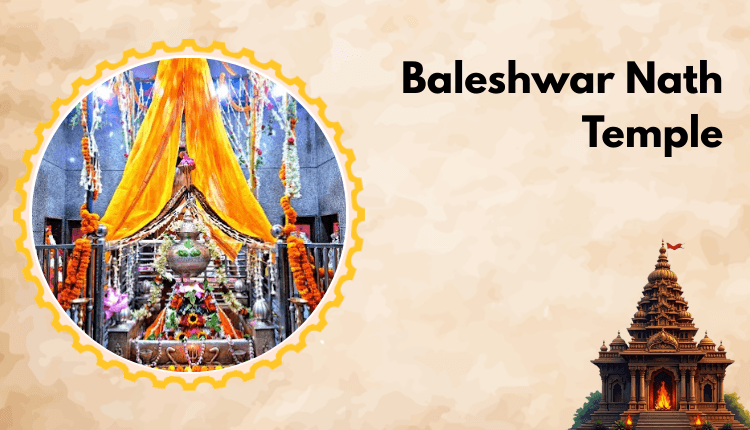
ShareBaleshwar Nath Temple Ballia
Baleshwar Nath Temple in Ballia is one of the most sacred and popular temples dedicated to Lord Shiva. Known for its peaceful atmosphere and powerful spiritual vibrations, this ancient temple attracts devotees throughout the year. People come here to offer prayers, perform Rudrabhishek, and seek blessings for health, prosperity, and protection from difficulties. Whether you are a spiritual seeker or a traveler, this holy site offers a deeply calming and divine experience.
About Baleshwar Nath Temple
Baleshwar Nath Temple is one of Ballia’s most revered Shiva temples, known for its historical significance and deep spiritual importance. Surrounded by serenity, the temple is believed to be centuries old and holds a special place in the hearts of the local community. Devotees believe that praying at this temple especially during Shravan, Mahashivratri, and Mondays fulfills wishes and removes obstacles. The simple yet powerful architecture of the temple reflects ancient traditions, and the Shivalinga is considered Swayambhu (self-manifested) by many devotees. Daily rituals, including Abhishek, Aarti, and chanting of Shiva mantras, fill the temple with divine energy. Visiting this sacred shrine not only offers spiritual blessings but also brings peace of mind, positivity, and inner strength. For anyone visiting Ballia, Baleshwar Nath Temple is a must-visit destination for spiritual upliftment and cultural connection.
Baleshwar Nath Temple, Ballia
In Uttar Pradesh, not only Kashi is famous for its Shiva temples, but Ballia’s Baleshwar Nath Shiva Temple is also an important and revered shrine. In this article, let us explore this sacred temple in detail.
History of Baleshwar Nath Temple, Ballia
Located on the holy land of Ballia district at the eastern edge of Uttar Pradesh, Baleshwar Nath Temple is an ancient and sacred abode of Lord Shiva. It holds both religious significance and a rich heritage of history and culture. According to belief, Shukracharya, the great guru of the Asuras, renowned for his penance and knowledge, was resting at the ashram of his father, Maharishi Bhrigu. At the same time, King Bali, the generous Asura emperor known for his devotion and righteousness, came to meet him. Guided by Shukracharya, King Bali organized a grand Rudra Yajna. This was not an ordinary ritual—it was a divine union of devotion, discipline, and dedication. King Bali dedicated this yajna to Lord Shiva and worshipped a divine Shiva Lingam as his supreme deity. This Shiva Lingam became the center of his devotion. King Bali worshipped it daily with deep faith and reverence. With time, the echo of this devotion still resonates at this sacred place. Because of Bali's unwavering dedication towards Lord Shiva, the Shiva Lingam began to be known as “Bali’s Ishwar”, which eventually became “Baleshwar.” Thus, Baleshwar Nath Temple stands as a living symbol of devotion, history, and divine grace. Historians believe that the temple might have been constructed by local rulers during medieval times. This region has always been a center of spirituality and learning, and Baleshwar Nath Temple beautifully reflects this heritage.
Architecture of Baleshwar Nath Temple, Ballia
The temple’s architecture is a fine example of traditional North Indian Hindu temple design. The main shikhara (tower) is tall and visually appealing, attracting devotees from afar.
The temple complex has a large courtyard with spacious seating areas for devotees to offer prayers peacefully.
The sanctum sanctorum houses the ancient and miraculous Shiva Lingam.
In front of it stands the grand and divine statue of Nandi Maharaj, whom devotees bow to before entering.
The temple walls showcase beautiful depictions of various stories from Hindu scriptures such as Shiva-Parvati marriage, Shiva Tandava, and the birth of Lord Ganesha.
A small sacred pond is also present in the temple premises, where taking a holy dip is considered auspicious.
Timings of Baleshwar Nath Temple, Ballia
The temple opens every day at 5:00 AM with the Mangala Aarti.
It closes at 9:00 PM after the Shayan Aarti.
Throughout the day, devotees offer Jalabhishek, Belpatra, Gangajal, and Datura to Lord Shiva.
During Shravan month and Mahashivaratri, special decorations are done, and lakhs of devotees visit the temple. On these days, the temple remains open 24 hours, and continuous bhajans and kirtans are performed.
Prasad of Baleshwar Nath Temple, Ballia
Devotees are offered special prasad such as: Panchmeva
Churan laddoo
Mishri
Fresh fruits
During Shravan and Mahashivratri, special bhog is prepared which includes: Kheer
Puri
Sabzi
Halwa
Devotees can buy flowers, belpatra, incense sticks, and sacred ash from stalls outside the temple.
How to Reach Baleshwar Nath Temple, Ballia
By Train Ballia Railway Station is part of the North-Eastern Railway network and is well-connected to major Indian cities such as: Varanasi Lucknow Delhi Patna Kolkata The temple is about 3–4 km from Ballia Railway Station and can be reached easily by rickshaw, auto-rickshaw, or taxi.
By Bus UPSRTC buses connect Ballia to major cities like: Varanasi Ghazipur Azamgarh Gorakhpur Lucknow The temple is about 10 minutes from the main bus stand.
By Air Ballia does not have an airport. The nearest airport is Lal Bahadur Shastri International Airport, Varanasi, about 140 km away. From the airport, one can reach Ballia by: Taxi Bus Train There are trains available almost every hour from Varanasi to Ballia.
Conclusion
Baleshwar Nath Temple is not only a spiritual pilgrimage site but also a symbol of the cultural identity of Ballia. Devotees visiting this sacred place experience profound peace and divine connection. If you are planning a trip to Purvanchal, a visit to Baleshwar Nath Temple in Ballia is a must. This sacred place will enrich your spiritual journey with new energy, devotion, and tranquility. Truly, this temple is a place of “Divine Encounter with Lord Shiva.” Do visit at least once.

Did you like this article?
Recommended
Read more