
Pitru Paksha Shradh Pitru Mukti Pitru-Pati Yam Dharmaraj Chadhava
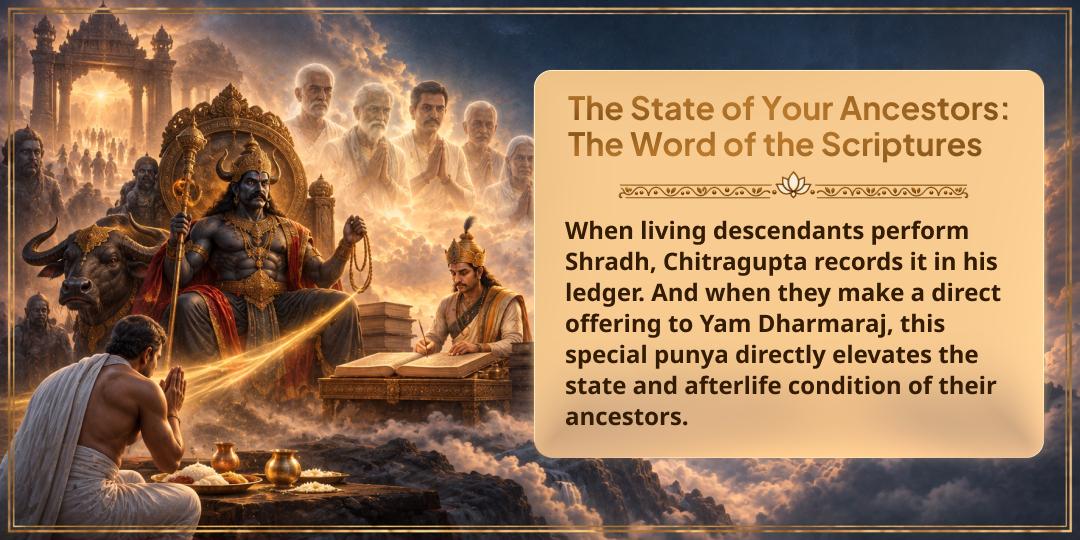
Every family performs Shraddha. Every descendant remembers their ancestors. But there is one question that almost no one asks - when you perform rituals for the Pitrs - who decides what their condition is? Who maintains the account of their deeds? And most importantly - which deity is it, whose propitiation directly improves the condition of your Pitrs?
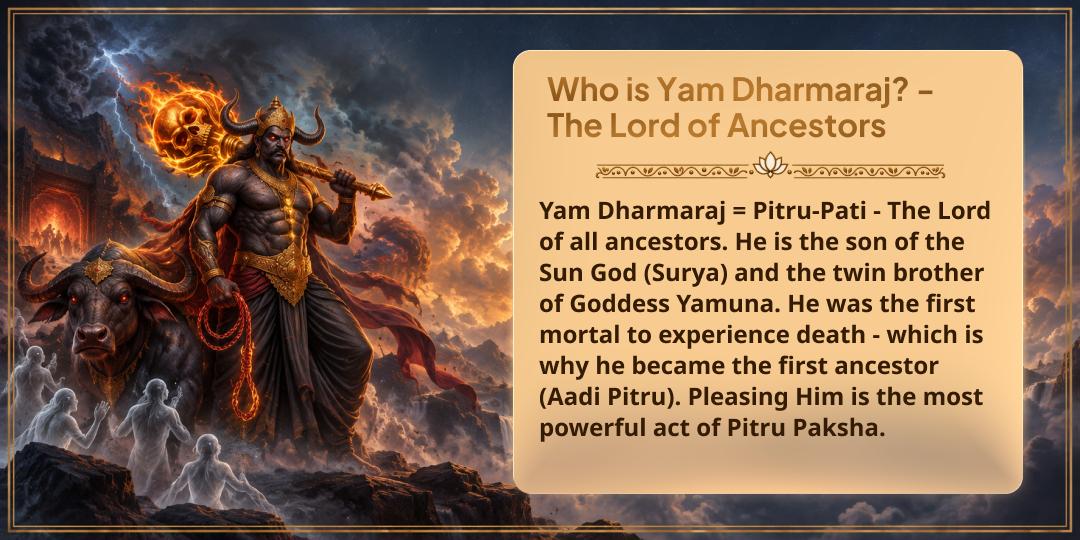
Yam Dharmaraj (Pitru-Pati)
He is Dharmaraj - the deity of supreme justice. Son of Lord Surya. Brother of Devi Yamuna. And He was the first being to experience death - which is why Sanatan Dharma declared Him the Adi Pitr (the First Ancestor) and the sovereign of all Pitrs - Pitru-Pati.
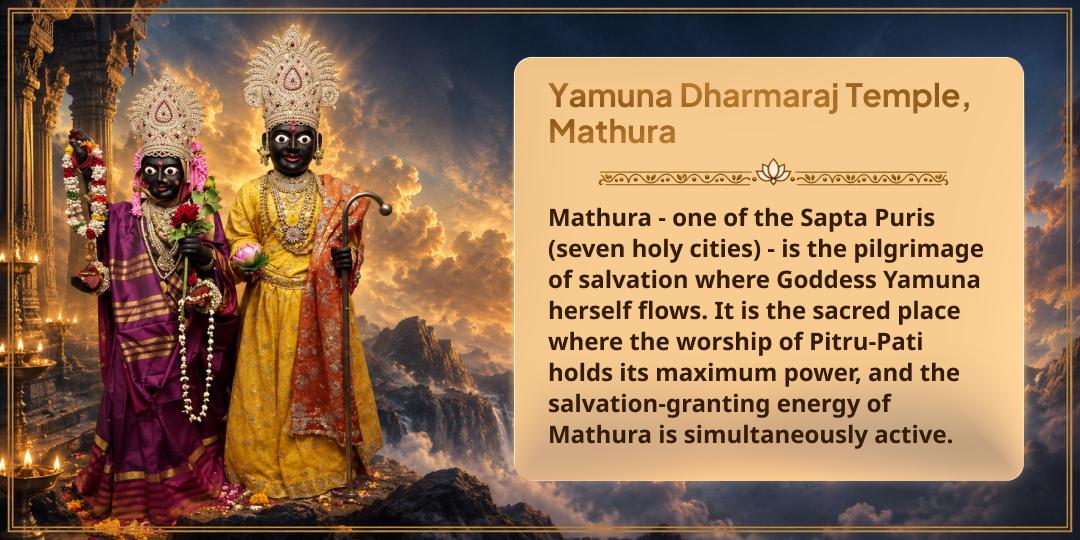
Yamuna Dharmaraj Mandir, Mathura - A Seat of Divine Grace.
Devi Yamuna is Yam Dharmaraj's twin sister. Both are children of Lord Surya. To offer Chadhava to Yam Dharmaraj on the sacred banks of the Yamuna in Mathura = the simultaneous grace of twin divine powers. And Mathura - a Moksha Tirtha, one of the Sapta Puris - every act of dharma performed here is consecrated by the city's very power of liberation.
Offer Yam Dharmaraj Chadhava from wherever you are - through Sri Mandir.
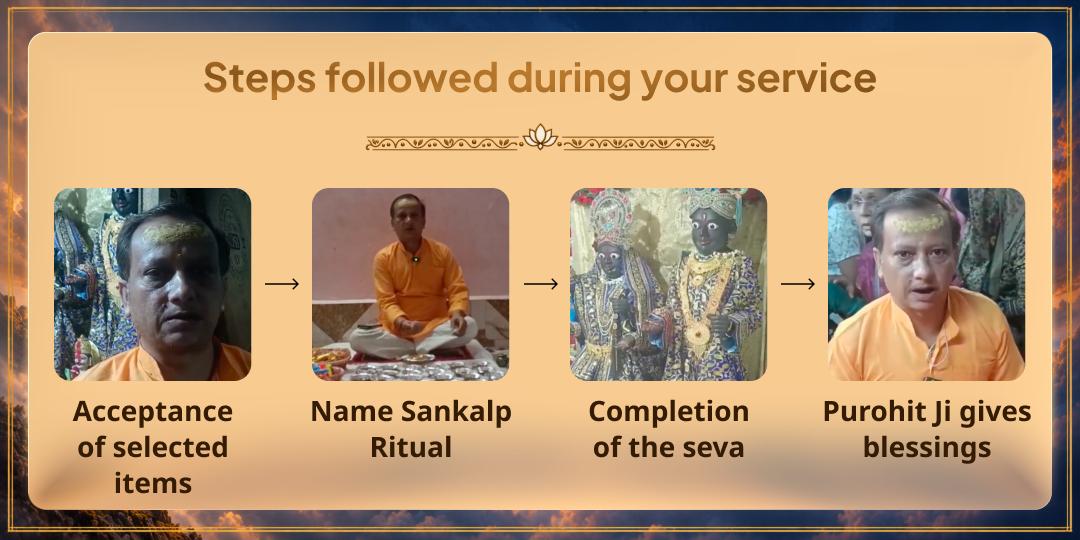
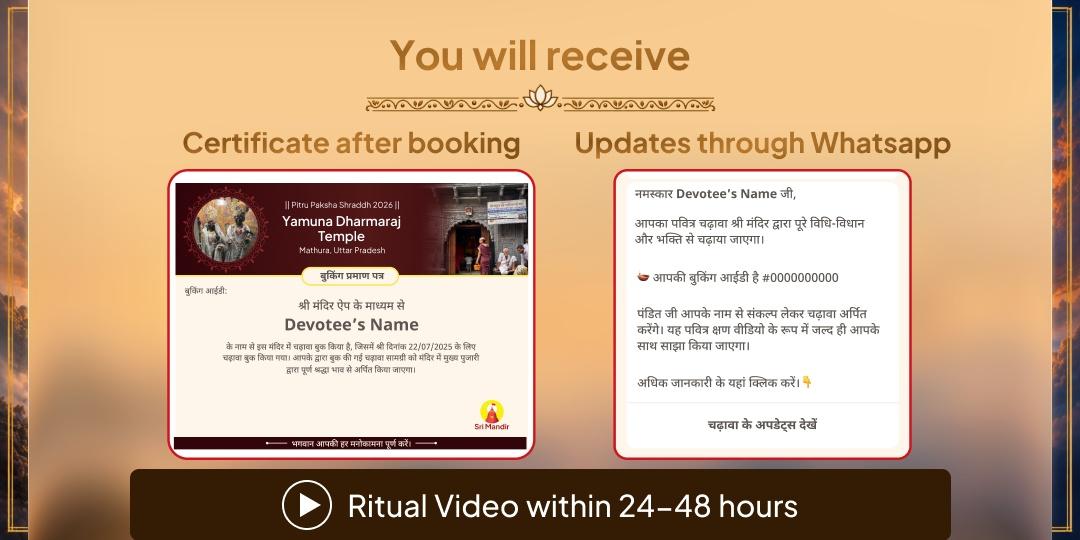
Travelling to Mathura during Pitru Paksha and personally offering Chadhava at the Yamuna Dharmaraj Mandir is not possible for every family. But through Sri Mandir, you can have the Chadhava completed at Yamuna Dharmaraj Mandir, Mathura - in your name, with a formal Sankalp - from wherever you are. The ritual will be performed with complete vidhi-vidhan, and video proof will be delivered to your phone within 24–48 hours.


Through the Sri Mandir Chadhava Service App, your offering will be devoutly presented by our experienced Purohits. You will receive a video of the ritual within 24-48 hours, bringing you divine blessings and prosperity.
The Garuda Purana clearly states that ancestors reside in Pitru Loka in a “vayu-rupa” (air-like form) and return to their descendants during Pitru Paksha. The ancestors are said to reside in Chandraloka, and during Pitru Paksha, the distance between Earth and the Moon is at its shortest, both scientifically and spiritually. On Purnima, when the Moon is full, the ancestors are believed to be at their most active and receptive. This is the science of Shradh - when a descendant remembers their ancestors with a Sankalp in their name, the invitation is believed to reach that soul.
Every human being is born with five debts, among which Pitru Rin is considered the greatest. If it is not fulfilled through Shraadh and Tarpan during Pitru Paksha, it gradually takes the form of “Pitru Dosha.” To a greater or lesser extent, everyone carries some form of Pitru Rin in their life. However, in families that regularly perform Pitru rituals, this Dosha is believed to remain inactive. In families that have not performed Shraadh for several generations, this Dosha is believed to become more prominent.
Yes, absolutely. It is a major misconception that only men can perform Shraadh. The Ramayana provides an example: when Rama and Lakshmana went to collect the required materials, Mata Sita performed Pind Daan for King Dasharatha alone on the banks of the Phalgu River. This Shraadh was so powerful that Rama’s Sankalp letter became a witness. The verse “Ye ke chasmatkule jata aputta gotravighrahah” clearly indicates that even in the absence of a son, a daughter or any descendant can perform Shraadh.
Yes! Shraadh is not performed only for deceased parents - it can also be performed for grandparents, maternal grandparents, great-grandparents, and any departed ancestor of the family. Even if all three generations are alive, their ancestors (such as great-grandparents) may still be awaiting Shraadh. The Sankalp during Pitru Paksha is always made for “all the ancestors of the lineage.”
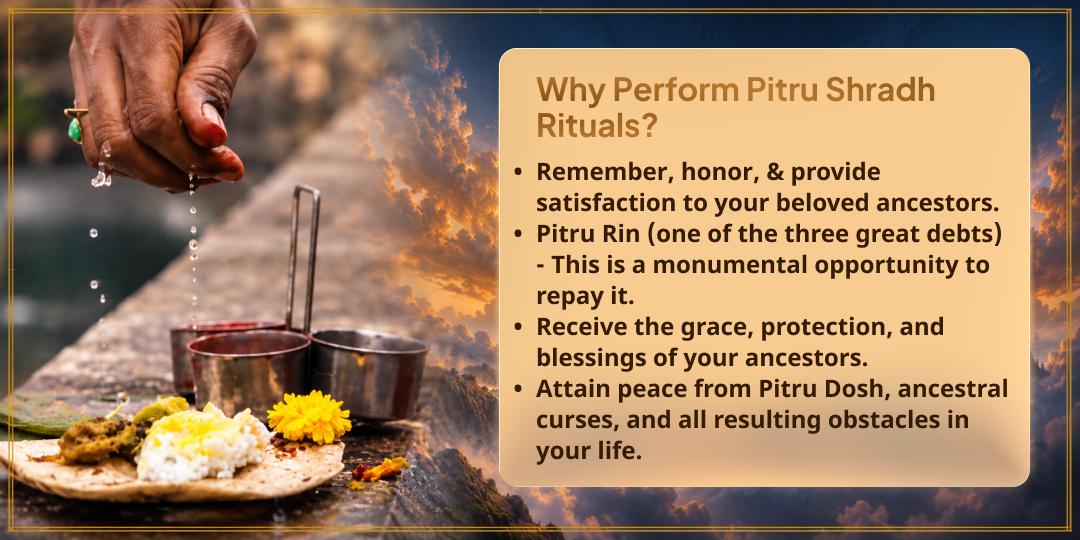
Pitru rituals, Tarpan, and Shraadh can be performed throughout the year, but their spiritual significance during Pitru Paksha is believed to be thousands of times greater. The reason is that during this fortnight, ancestors are believed to come closer to Earth, allowing offerings to reach them more directly and immediately. Just as there is a difference between making a phone call and speaking to someone face-to-face, Shraadh during Pitru Paksha is like speaking to them face-to-face. The Markandeya Purana states that Tarpan performed during Pitru Paksha keeps the ancestors satisfied throughout the year.
Yes, the scriptures give clear permission for this. - those who were dear to you and whose passing brought you grief - may also be honoured through Shraadh. During Pitru Paksha, take a special Sankalp in their name and perform the rituals for the peace of their soul. There is no limit to love, and Shraadh is considered its highest expression.
If you face any issues with your Service, you can contact our Sri Mandir customer service team at 📞918296947757, who are always ready to assist you.