
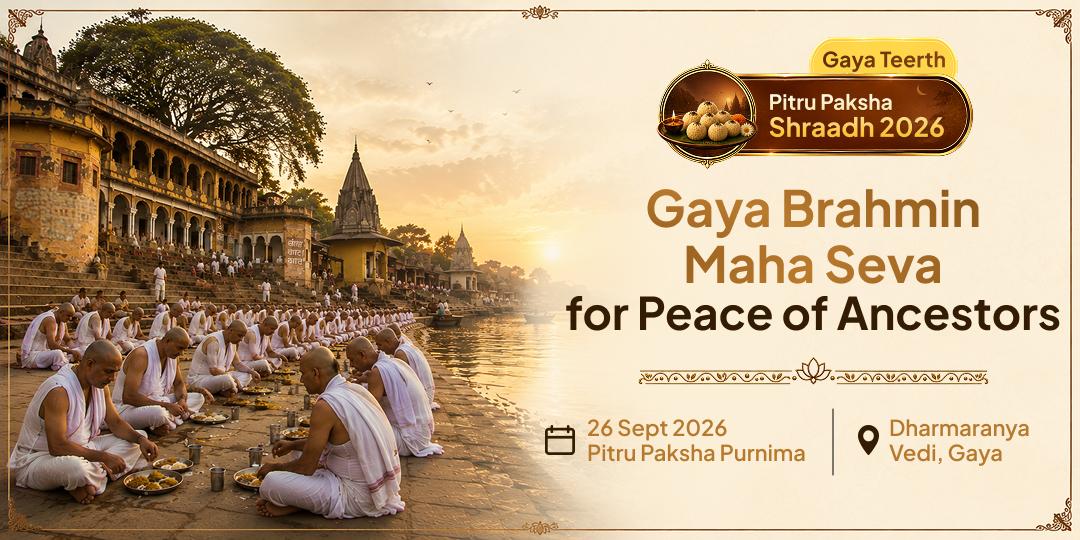
Pitru Paksha Shraddh Gaya Ji Brahmin Seva for Peace of Ancestors
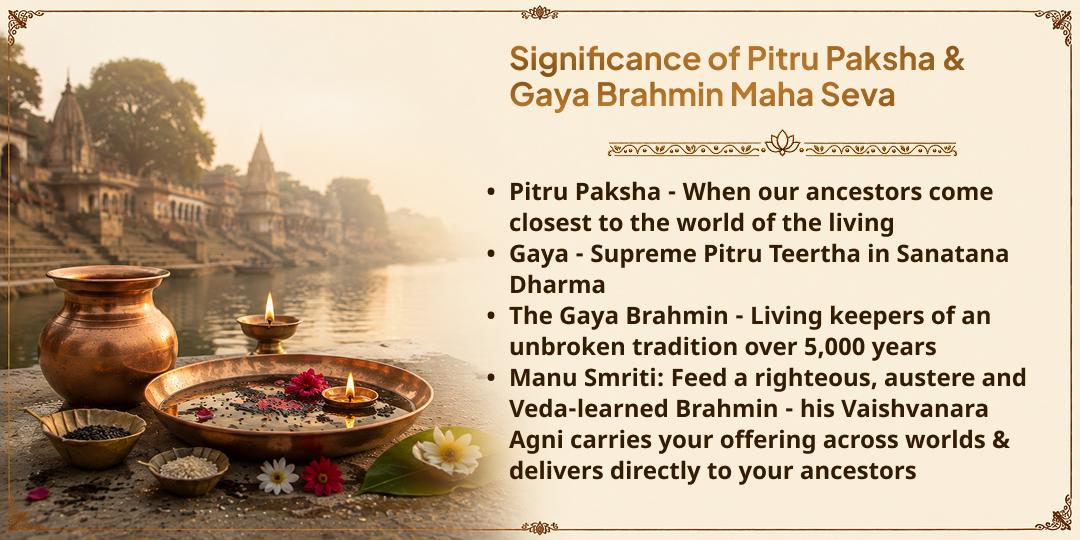
Pitru Paksha - the sacred fortnight when our ancestors come close to the world of the living, waiting with quiet hope for the thread of love and remembrance that connects the worlds. In these 15 days, every act performed at Gaya - every offering made through the hands of Brahmins travels further than at any other time to your ancestors.
Why Gaya? Because only at Gaya - ancestral liberation is a scriptural guarantee
The Vayu Purana states - performing Shraddh at Gaya liberates seven generations of ancestors. The Garuda Purana states - performing Shraddh at Gaya grants the living descendant the power to give liberation to their ancestors. This is what makes Gaya the supreme Pitru Teertha of Sanatana Dharma.
The Gaya Brahmins - The Living Keepers of a 5,000-Year Tradition
The Brahmins of Gaya are not ordinary priests. They are Pitru Sevaks - sacred servants of the ancestors - the living, breathing bridge between this world and Pitru Loka. Their hereditary lineage has remained unbroken since Vedic times. Each Brahmin family has served, across countless generations, the families of a specific region and gotra of India creating a bond that is not the relationship of priest and pilgrim, but the eternal covenant between ancestral guardian and ancestral descendant. When a Gaya Brahmin takes your name and gotra in sankalpa, he is not merely reciting words. He is activating a connection that has been held sacred for five thousand years.
When You Feed Brahmins - Your Ancestors Are Nourished
Manu Smriti - “In Shraddh, only a righteous, austere, Veda-learned, spiritually disciplined Brahmin should be fed - because only such a Brahmin carries within him the Vaishvanara Agni, the sacred inner fire that transforms the physical food into a subtle form and transmits it across the worlds directly to Pitru Loka. When you feed the Brahmin, your ancestors receive nourishment. When you clothe him, your ancestors are clothed with dignity in Pitru Loka. When you offer grain, you sustain them. When you offer fruit, you ease the karmic bonds that bind them and open their path toward liberation.
Perform Gaya Ji Brahmin Seva from Home - Through Sri Mandir!
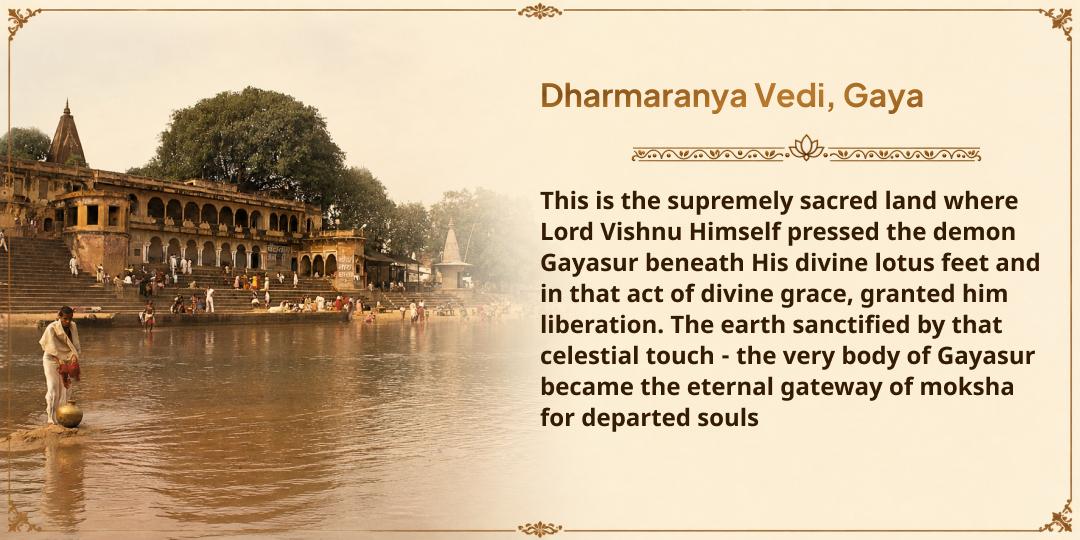
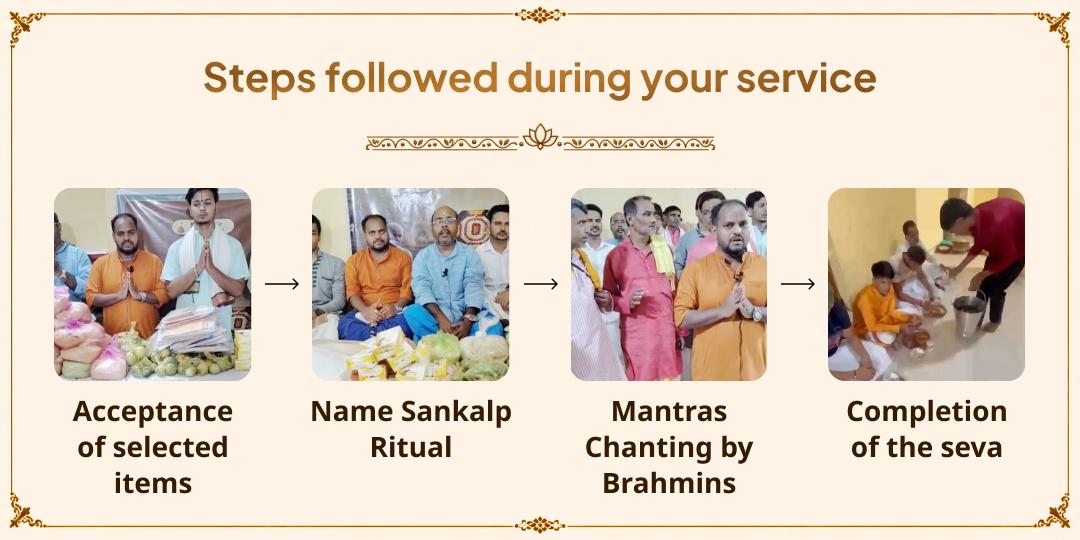
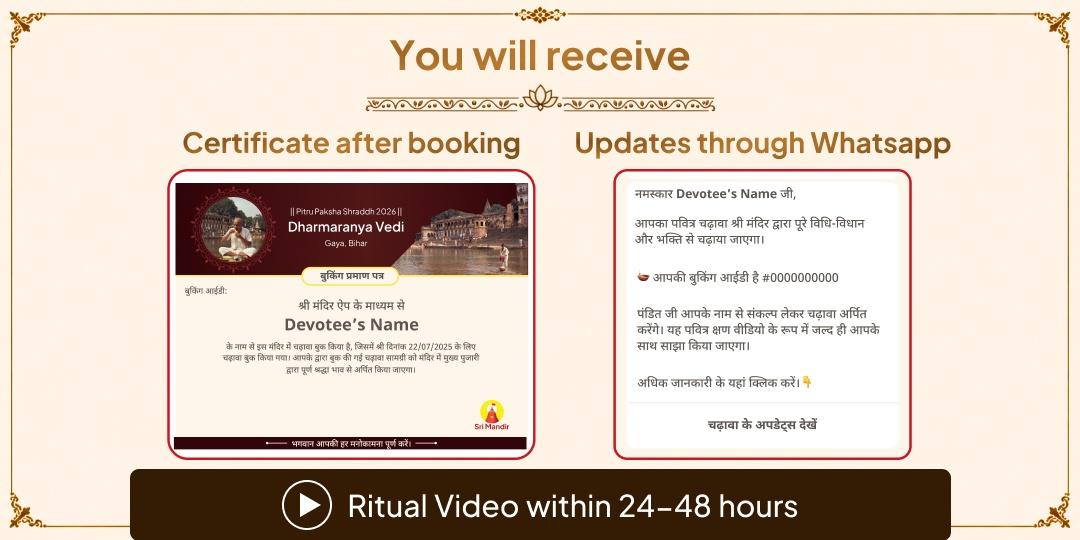
Travelling to Gaya Ji personally during Pitru Paksha and arranging a Brahmin directly is not possible for every family. But through Sri Mandir, you can - from wherever you are in the world - have the certified Brahmin of Dharmaranya Vedi, Gaya perform Brahman Bhojan, Vastra Daan, Anaaj Daan and Phal Daan in your name and gotra. The entire seva is conducted with complete traditional vidhi-vidhaan by the authenticated priestly lineage of Gaya. Video of the seva will be delivered to you within 24 to 48 hours.
This booking is a collective act of service, made meaningful by everyone who participates. It is a shared contribution, and not an individual offering that comes together for a higher purpose. Through this collective offering, we are able to carry this sacred initiative forward and reach many more people.


We are a for-profit technology company that offers services to facilitate the collection and distribution of voluntary donations to temples and / or registered charitable organizations (NGOs, Section 8 Companies, and Trusts). We charge a small service/processing fee (if applicable), and all transactions are fully transparent. Our role is limited to enabling secure and transparent transactions between donors and recipient organizations.
We do not represent ourselves as a charitable trust, religious endowment, or not-for-profit organization unless otherwise specified and registered under applicable laws. Tax exemptions under Section 80G of the Income Tax Act, 1961 are only applicable where the recipient NGO holds a valid 80G certificate and has issued a receipt to that effect. We do not guarantee any tax benefit unless explicitly mentioned. By using our platform, you acknowledge that your contribution is voluntary, and you are solely responsible for confirming the legal, tax, and financial implications of your donation.
Mahaseva is a very virtuous and fruitful donation, which has been mentioned repeatedly in the Vedas and Puranas. When a person performs the highest acts like food, clothing and grains with devotion and selflessness, it is called Mahaseva. This donation not only destroys the sins of the donor, but also satisfies the ancestors, gods and sages and liberates him from the bondage of karma of many births!
The Garuda Purana clearly states that ancestors reside in Pitru Loka in a “vayu-rupa” (air-like form) and return to their descendants during Pitru Paksha. The ancestors are said to reside in Chandraloka, and during Pitru Paksha, the distance between Earth and the Moon is at its shortest, both scientifically and spiritually. On Purnima, when the Moon is full, the ancestors are believed to be at their most active and receptive. This is the science of Shradh - when a descendant remembers their ancestors with a Sankalp in their name, the invitation is believed to reach that soul.
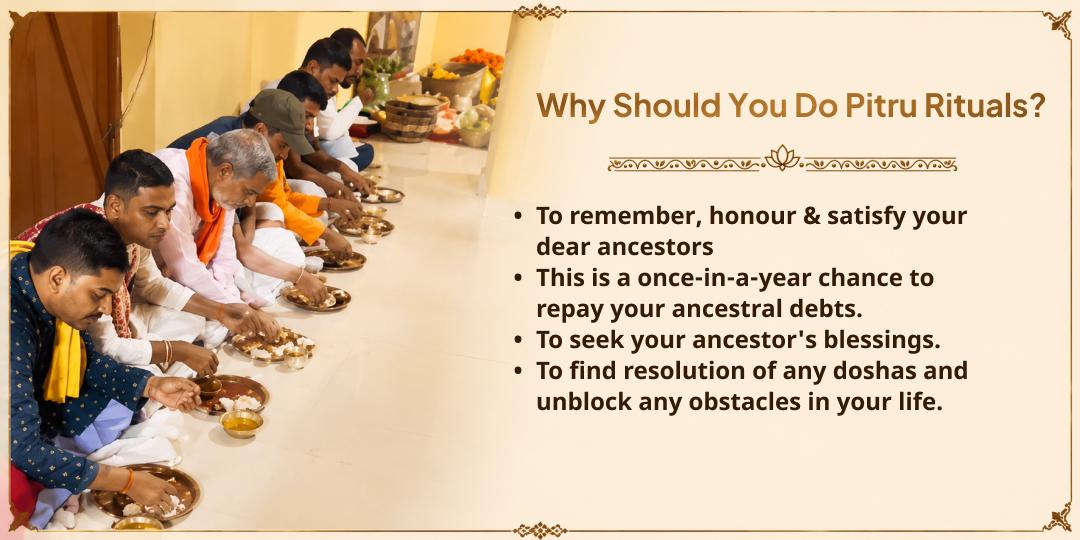
Every human being is born with five debts, among which Pitru Rin is considered the greatest. If it is not fulfilled through Shraddha and Tarpan during Pitru Paksha, it gradually takes the form of “Pitru Dosha.” To a greater or lesser extent, everyone carries some form of Pitru Rin in their life. However, in families that regularly perform Pitru rituals, this Dosha is believed to remain inactive. In families that have not performed Shraddha for several generations, this Dosha is believed to become more prominent.
Yes, absolutely. It is a major misconception that only men can perform Shraddha. The Ramayana provides an example: when Rama and Lakshmana went to collect the required materials, Mata Sita performed Pind Daan for King Dasharatha alone on the banks of the Phalgu River. This Shraddha was so powerful that Rama’s Sankalp letter became a witness. The verse “Ye ke chasmatkule jata aputta gotravighrahah” clearly indicates that even in the absence of a son, a daughter or any descendant can perform Shraddha.
Yes! Shraddha is not performed only for deceased parents — it can also be performed for grandparents, maternal grandparents, great-grandparents, and any departed ancestor of the family. Even if all three generations are alive, their ancestors (such as great-grandparents) may still be awaiting Shraddha. The Sankalp during Pitru Paksha is always made for “all the ancestors of the lineage.”
Pitru rituals, Tarpan, and Shraddha can be performed throughout the year, but their spiritual significance during Pitru Paksha is believed to be thousands of times greater. The reason is that during this fortnight, ancestors are believed to come closer to Earth, allowing offerings to reach them more directly and immediately. Just as there is a difference between making a phone call and speaking to someone face-to-face, Shraddha during Pitru Paksha is like speaking to them face-to-face. The Markandeya Purana states that Tarpan performed during Pitru Paksha keeps the ancestors satisfied throughout the year.
Yes, the scriptures give clear permission for this. The list of people for whom Shraddha may be performed at Gokarna includes a teacher, disciple, friend, father-in-law, brother-in-law, maternal uncle, brother, and sister. “Atmiya Jana” — those who were dear to you and whose passing brought you grief — may also be honoured through Shraddha. During Pitru Paksha, take a special Sankalp in their name and perform the rituals for the peace of their soul. There is no limit to love, and Shraddha is considered its highest expression.
If you face any issues with your Service, you can contact our Sri Mandir customer service team at 📞918296947757, who are always ready to assist you.