
Pitru Paksha Shraddh 8 Tithis 8 MahaTeerths 21 Brahmins Seva
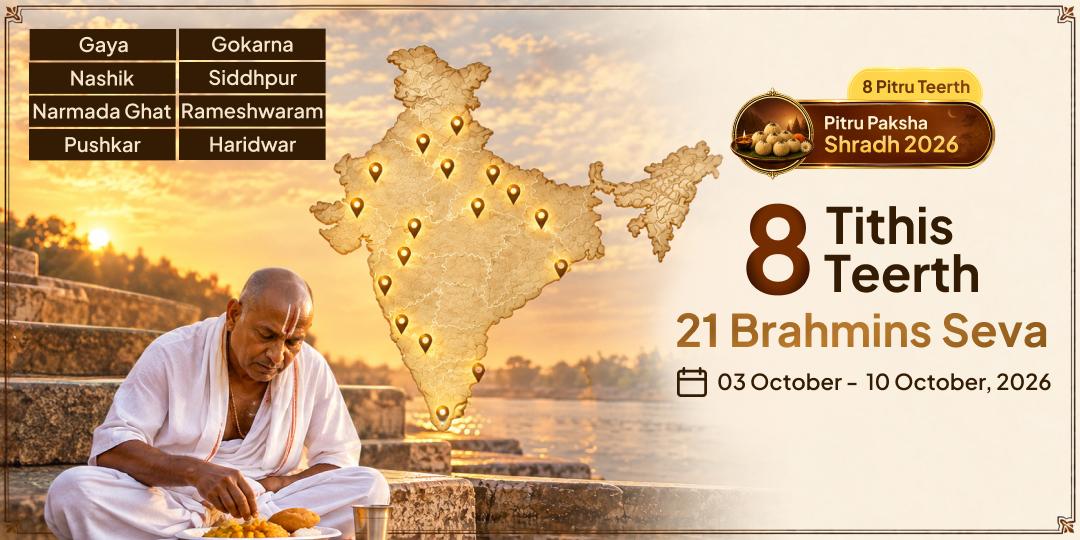
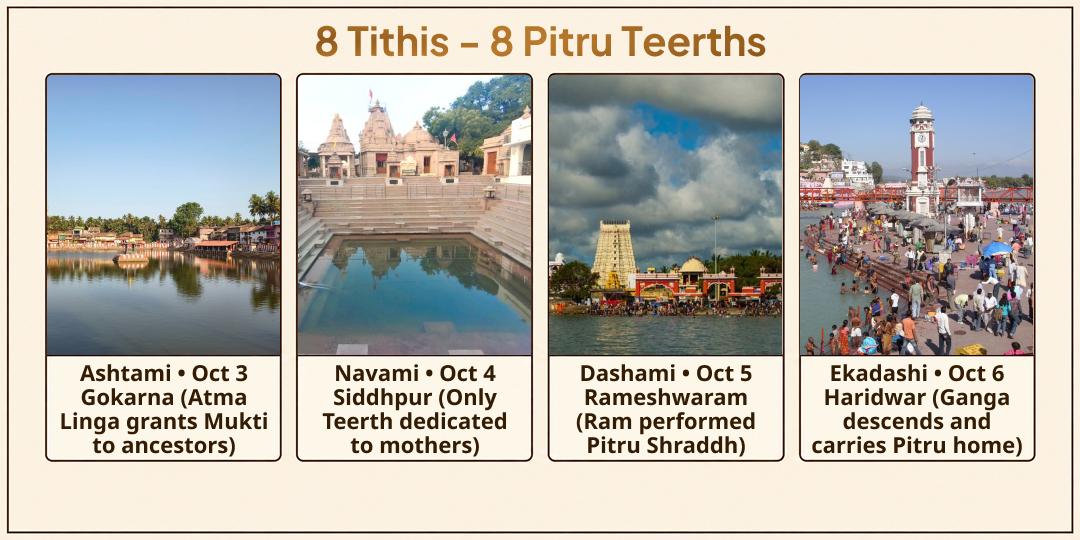
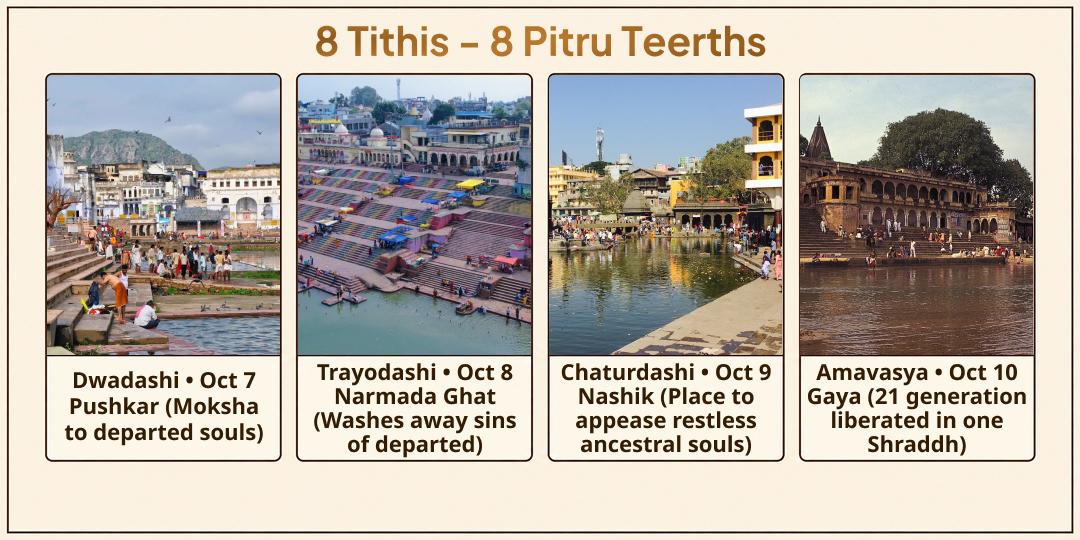
Pitru Paksha comes only once a year - and for the first time, 8 of India's most sacred teerths open together as one Shraddh Maha Sankalp: a new tithi, a new teerth, every day, from Purnima at Kashi to Amavasya at Gaya, so no ancestor in your lineage is left without satisfaction & remembrance.
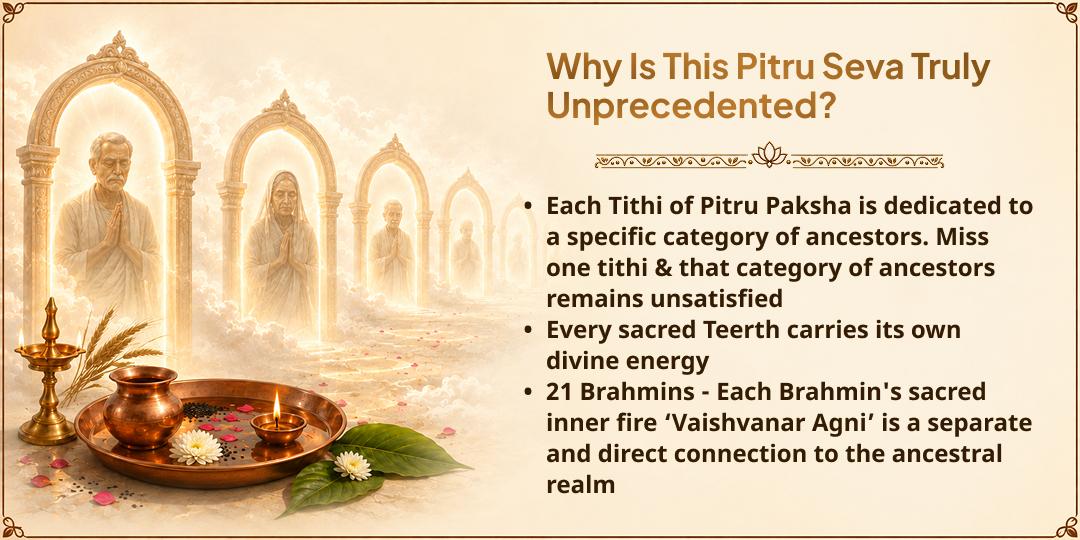
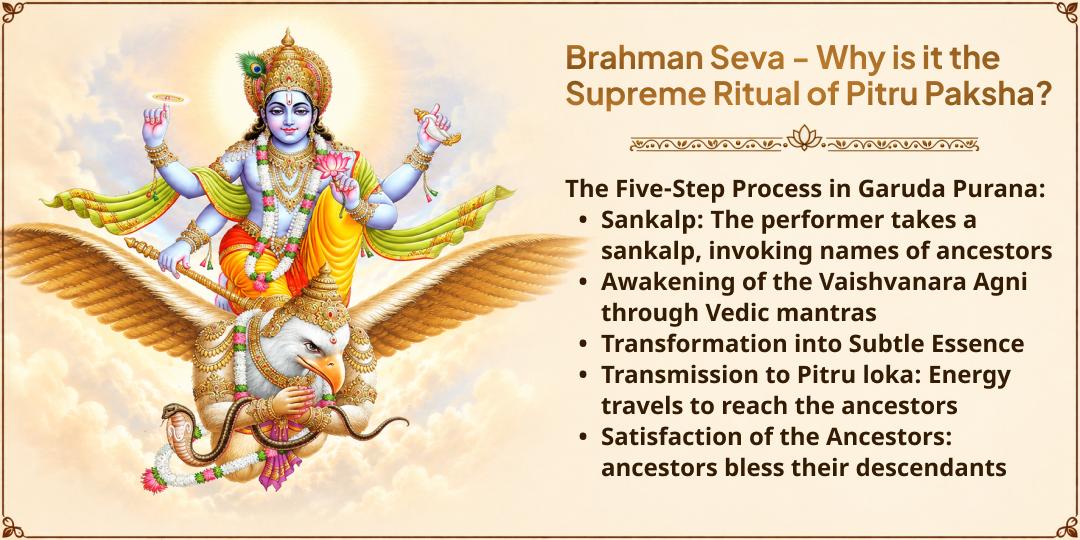
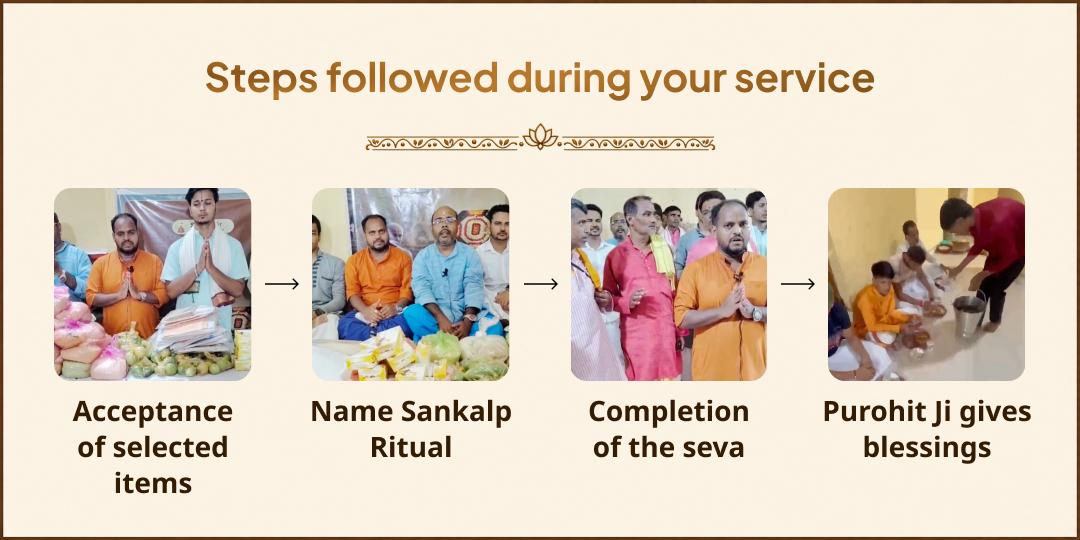
Each day, 21 Vedic Brahmins gather at that day's teerth and Sri Mandir performs different sevas to them on your ‘Ancestor's Name Sankalp’ with exact proper vidhi-vidhan. Through Vedic recitation, the Brahmin's Vaishvanar Agni is awakened, turning your offering into Sukshma Ansha - a subtle essence that reaches your ancestors wherever they are, leaving them satisfied, ready to bless the living with prosperity, progeny, and peace.
8 Tithis means 8 categories of ancestors addressed in a single seva - so no soul in your lineage goes unremembered, even those your family may no longer recall by name.
No family could physically visit 8 teerths across India on 8 tithis - whether living in India or abroad. Sri Mandir makes it possible from wherever you are: one Sankalp, one booking, and full video proof of the seva performed in your ancestors' name at each teerth, each day.
This 8-tithis, 8-teerths seva is happening only once, for Pitru Paksha 2026 with Sri Mandir - 3 October to 10 October. Book your ancestors' names today; each tithi's window closes the moment that day ends.


We are a for-profit technology company that offers services to facilitate the collection and distribution of voluntary donations to temples and / or registered charitable organizations (NGOs, Section 8 Companies, and Trusts). We charge a small service/processing fee (if applicable), and all transactions are fully transparent. Our role is limited to enabling secure and transparent transactions between donors and recipient organizations.
We do not represent ourselves as a charitable trust, religious endowment, or not-for-profit organization unless otherwise specified and registered under applicable laws. Tax exemptions under Section 80G of the Income Tax Act, 1961 are only applicable where the recipient NGO holds a valid 80G certificate and has issued a receipt to that effect. We do not guarantee any tax benefit unless explicitly mentioned. By using our platform, you acknowledge that your contribution is voluntary, and you are solely responsible for confirming the legal, tax, and financial implications of your donation.
Mahaseva is a very virtuous and fruitful donation, which has been mentioned repeatedly in the Vedas and Puranas. When a person performs the highest acts like food, clothing and grains with devotion and selflessness, it is called Mahaseva. This donation not only destroys the sins of the donor, but also satisfies the ancestors, gods and sages and liberates him from the bondage of karma of many births!
Pitru Paksha is the sacred fortnight of the Krishna Paksha (waning phase of the Moon) in the month of Ashwin, when the veil between Pitru Loka and the mortal world is believed to be at its thinnest. On Purnima, the Sun enters Virgo, and the ancestors are believed to descend from Pitru Loka and come closer to their descendants. These 16 days, from Purnima to Amavasya, are observed because specific Shradh and Pitru rituals are prescribed on each Tithi for different categories of ancestors.
The Garuda Purana clearly states that ancestors reside in Pitru Loka in a “vayu-rupa” (air-like form) and return to their descendants during Pitru Paksha. The ancestors are said to reside in Chandraloka, and during Pitru Paksha, the distance between Earth and the Moon is at its shortest, both scientifically and spiritually. On Purnima, when the Moon is full, the ancestors are believed to be at their most active and receptive. This is the science of Shradh - when a descendant remembers their ancestors with a Sankalp in their name, the invitation is believed to reach that soul.
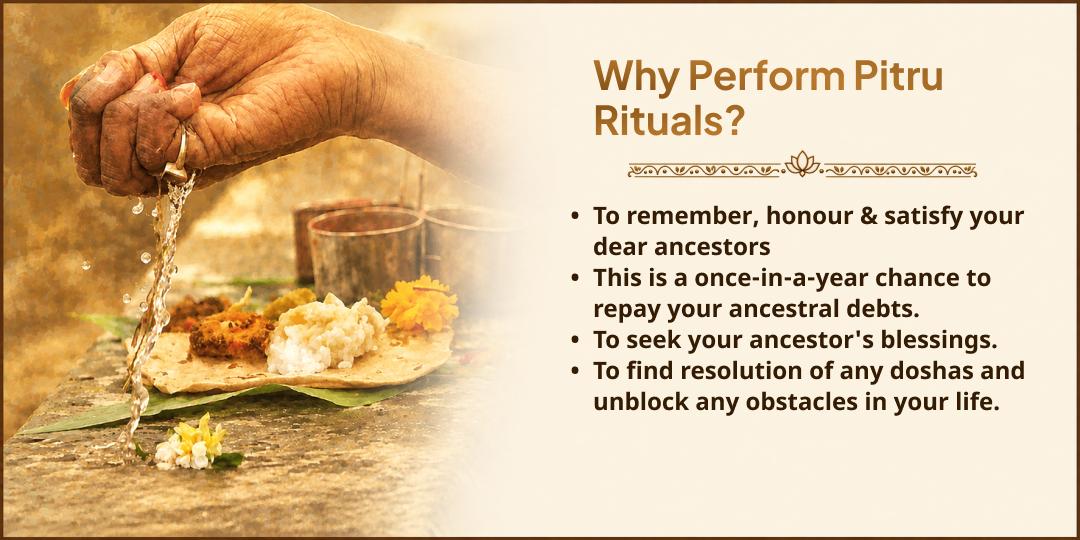
Every human being is born with five debts, among which Pitru Rin is considered the greatest. If it is not fulfilled through Shraddha and Tarpan during Pitru Paksha, it gradually takes the form of “Pitru Dosha.” To a greater or lesser extent, everyone carries some form of Pitru Rin in their life. However, in families that regularly perform Pitru rituals, this Dosha is believed to remain inactive. In families that have not performed Shraddha for several generations, this Dosha is believed to become more prominent.
Yes, absolutely. It is a major misconception that only men can perform Shraddha. The Ramayana provides an example: when Rama and Lakshmana went to collect the required materials, Mata Sita performed Pind Daan for King Dasharatha alone on the banks of the Phalgu River. This Shraddha was so powerful that Rama’s Sankalp letter became a witness. The verse “Ye ke chasmatkule jata aputta gotravighrahah” clearly indicates that even in the absence of a son, a daughter or any descendant can perform Shraddha.
Yes! Shraddha is not performed only for deceased parents — it can also be performed for grandparents, maternal grandparents, great-grandparents, and any departed ancestor of the family. Even if all three generations are alive, their ancestors (such as great-grandparents) may still be awaiting Shraddha. The Sankalp during Pitru Paksha is always made for “all the ancestors of the lineage.”
Yes, the scriptures give clear permission for this. The list of people for whom Shraddha may be performed at Gokarna includes a teacher, disciple, friend, father-in-law, brother-in-law, maternal uncle, brother, and sister. “Atmiya Jana” — those who were dear to you and whose passing brought you grief — may also be honoured through Shraddha. During Pitru Paksha, take a special Sankalp in their name and perform the rituals for the peace of their soul. There is no limit to love, and Shraddha is considered its highest expression.
If you face any issues with your Service, you can contact our Sri Mandir customer service team at 📞918296947757, who are always ready to assist you.