
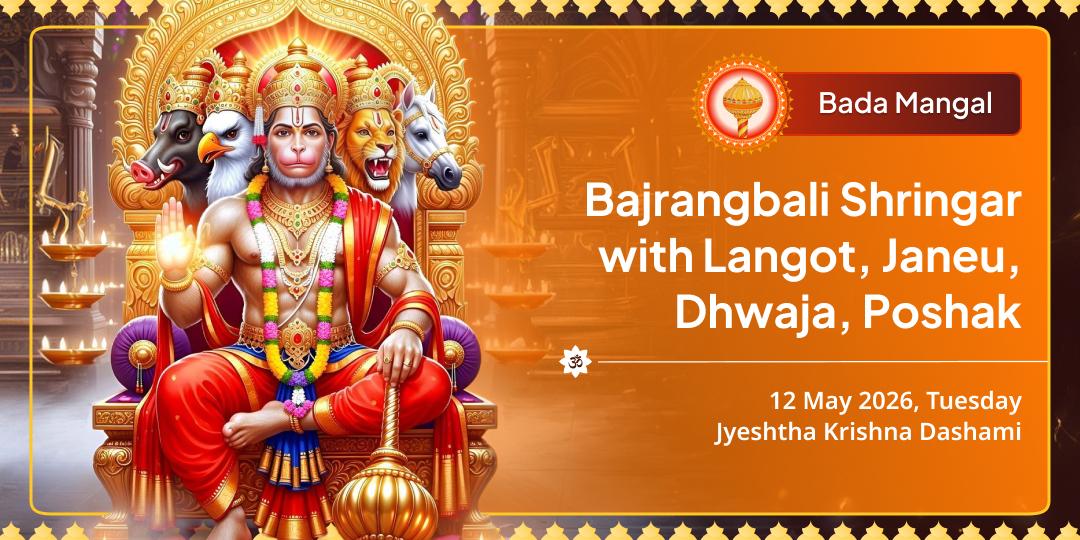
Bada Mangal 'Bajrangbali Shringar' - Langot, Janeu, Dhwaja & Poshak Seva
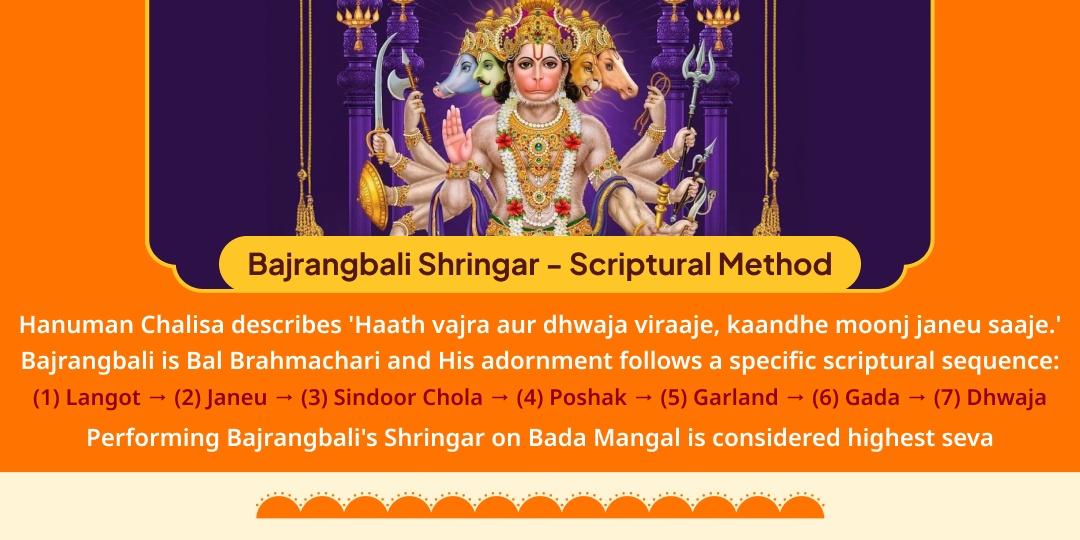
Scriptural Shringar Sequence:
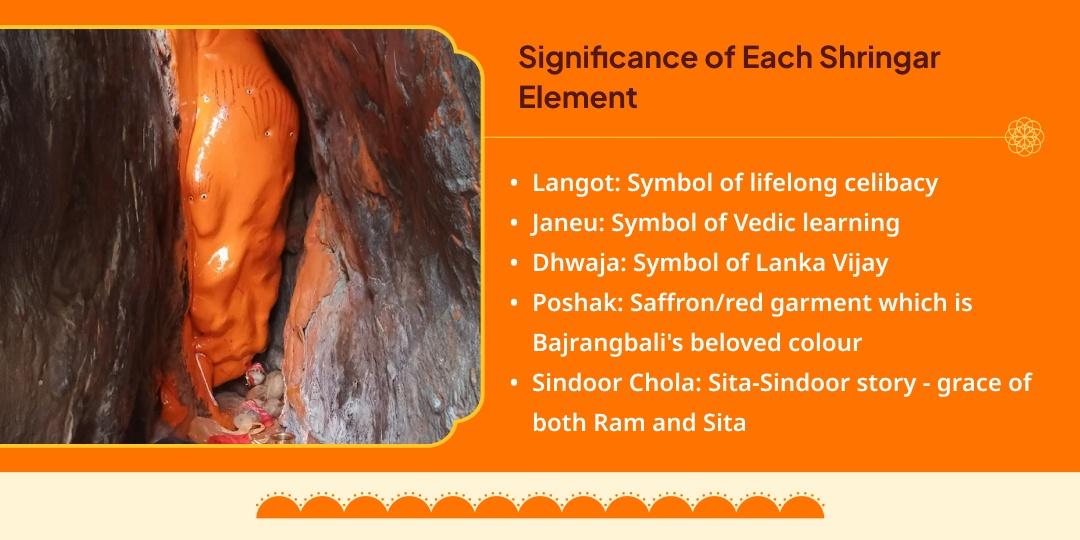
After abhishek: (1) Langot (celibacy) → (2) Janeu (Vedic learning) → (3) Sindoor Chola (Sita story) → (4) Poshak (saffron garment) → (5) Garland → (6) Gada (strength) → (7) Dhwaja (victory).
Panchmukhi Shringar = 5x Blessings:
Adorning Mehandipur's Panchmukhi Hanuman is special. 5 faces adorned = 5 directions blessed. Hanuman assumed this very form to destroy Ahiravan. Shringar of this form is the most powerful.
🙏 Bajrangbali ka Shringar = the highest seva. Adorn Panchmukhi Hanuman on Bada Mangal and He will adorn your life!


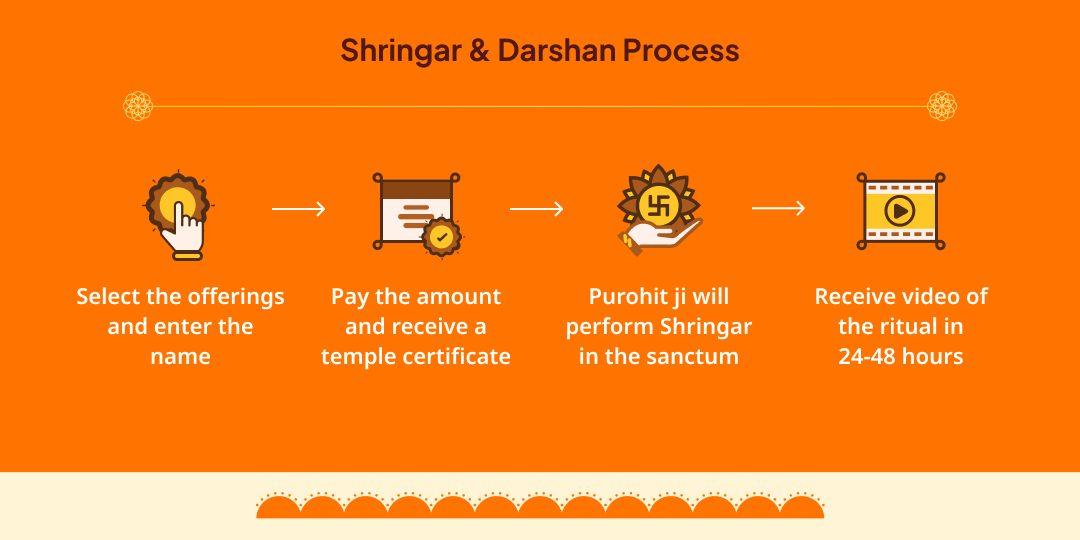
Through the Sri Mandir Chadhava Service App, your offering will be devoutly presented by our experienced Purohits. You will receive a video of the ritual within 24-48 hours, bringing you divine blessings and prosperity.
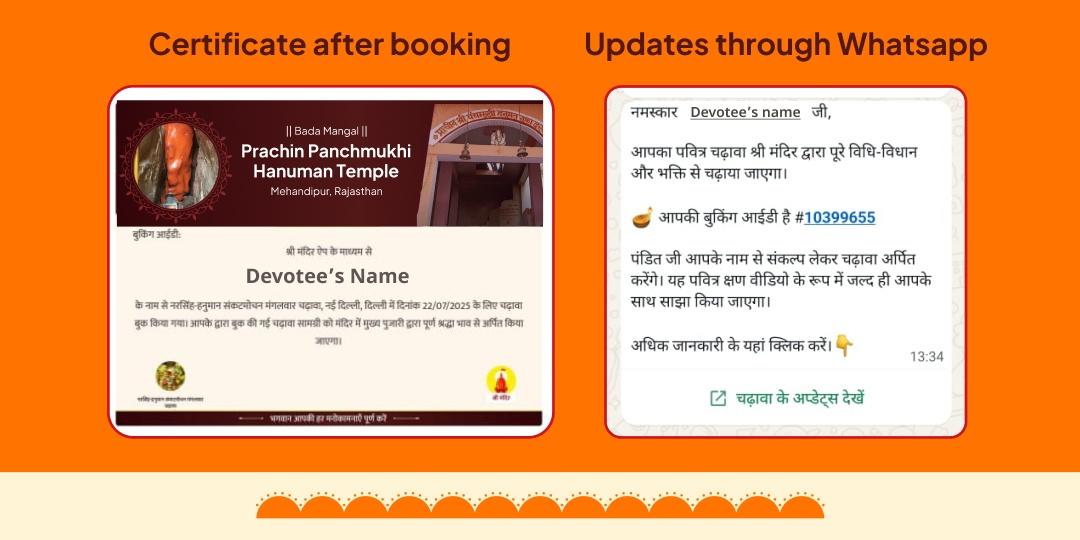
Yes, once you book an offering, you will receive a certificate immediately. You can view your certificate under the 'Services' page in the 'Your Bookings' section.
After booking, you will receive updates via WhatsApp. Additionally, you can check the complete details of your offering in the "Chadhava Bookings" section of the Sri Mandir App.
Sri Mandir is an App that allows you to book chadhavas at more than 100 renowned temples across India from the comfort of your home. You can select multiple options and include them in a single order.
If you face any issues with your Chadhava, you can contact our Sri Mandir customer service team at 💬7829661119 or 📞08071174417, who are always ready to assist you.