 Download
 Share
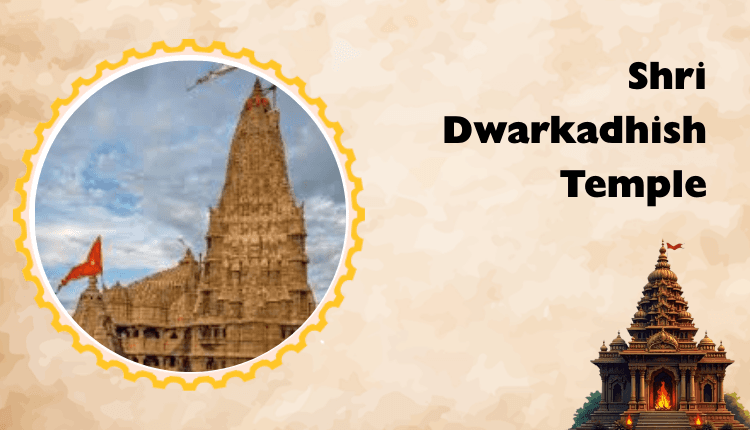
ShareShri Dwarkadhish Temple, Gujarat
Planning to visit the sacred Shri Dwarkadhish Temple in Gujarat? Discover its rich history, divine significance, darshan timings, architecture, major festivals, and complete travel tips every devotee should know before stepping into the holy city of Dwarka.
About Shri Dwarkadhish Temple
Shri Dwarkadhish Temple, also known as Jagat Mandir, is one of the most sacred temples dedicated to Lord Krishna, located in Dwarka, Gujarat. This ancient temple holds a special place in Hindu faith as it is believed to be the royal residence of Lord Krishna during his reign in Dwarka. Standing majestically near the Gomti River and the Arabian Sea, the temple radiates peace, devotion, and centuries of spiritual heritage. The temple’s intricate architecture, divine idol of Dwarkadhish (Lord Krishna as the “King of Dwarka”), and powerful rituals attract millions of devotees each year. Its five-story structure, supported by 72 pillars, is an architectural wonder representing strength and timeless devotion. Devotees believe that visiting Dwarkadhish Temple washes away sins, brings inner peace, and strengthens spiritual resolve. The temple’s atmosphere is filled with chanting, aarti sounds, and the fragrance of incense, creating an uplifting experience for visitors. The sacredness of this temple is further enhanced by its association with the Char Dham pilgrimage—making it a must-visit destination for followers of Sanatana Dharma. Whether one seeks blessings, peace, or historical knowledge, Shri Dwarkadhish Temple offers a divine journey that nurtures the soul and deepens one’s connection with Lord Krishna.
Pujas Chosen Just for You
Conduct a Puja in your name and gotra and seek divine blessings for your family.
Shri Dwarkadhish Temple, Gujarat
Shri Dwarkadhish Temple, located in Dwarka, Gujarat, is a major Hindu temple dedicated to Lord Krishna. The temple is built on eighty-four pillars and is known for its magnificent architectural style. Thousands of devotees visit every day to seek blessings. The temple has many unique features that leave visitors spellbound. If you want to know more about this sacred temple, read this article for detailed information. Shri Dwarkadhish Temple is a renowned Hindu temple located in Mathura, Uttar Pradesh. It is dedicated to Lord Krishna, who is also known as Dwarkadhish, meaning “King of Dwarka.” The temple is one of Mathura’s most prominent religious sites and attracts thousands of devotees and tourists daily. The temple stands out for its grand architecture, intricate carvings, vibrant paintings, and splendid decorations. During festivals like Janmashtami and Holi, the temple is specially decorated, and a massive number of devotees gather for celebrations. At the end of the Shravan month, the famous Swing Festival (Jhoola Utsav) is celebrated here, marking the arrival of the monsoon season. During this festival, the deity is placed on an exquisitely decorated swing, and devotional songs and hymns are performed.
History of Shri Dwarkadhish Temple, Mathura
According to available information, the Shri Dwarkadhish Temple was built in the year 1814 by Seth Ganeshi Lal Kapoor, who was the then Diwan of the Gwalior state. Although the temple is relatively newer compared to ancient temples, it holds immense religious significance and historical value. The temple is managed by the Vaishnav tradition, especially the followers of the lineage established by Mahaprabhu Vallabhacharya.
Architecture of Shri Dwarkadhish Temple, Mathura
The architecture of Shri Dwarkadhish Temple is an exceptional example of Indian craftsmanship and artistry. The temple is known not only for its religious importance but also for its artistic grandeur. The vast temple complex reflects strong influences of Rajasthani architectural style. To reach the main building, visitors climb a set of steep steps, which form a part of the temple’s traditional structure. At the center of the main courtyard lies a beautifully painted ceiling supported by three rows of intricately carved stone pillars. These pillars, along with the colorful artwork on the ceiling, captivate every visitor. The paintings illustrate various aspects of Lord Krishna’s life, such as his childhood pastimes, Raas Leela, and scenes from the Kurukshetra war. Thus, the temple serves not only as a spiritual destination but also as a treasure for lovers of architecture and art.
Timings of Shri Dwarkadhish Temple, Mathura
The temple opens for darshan every day at 6:00 AM. Devotees begin their day by seeking blessings of Lord Krishna as the doors of the temple open. Darshan continues throughout the day, and the final darshan takes place at 7:30 PM, after which the temple closes. Morning and evening aarti are especially beautiful and draw large crowds. If you wish to experience the serene spiritual atmosphere even after temple hours, you can visit Vishram Ghat, where the Yamuna Aarti is performed—an enchanting sight.
Prasad at Shri Dwarkadhish Temple, Mathura
The prasad offered at the temple is considered very sacred by devotees. Various offerings made to Lord Krishna—such as fruits, sweets, semolina halwa, churma, and other special dishes—are distributed among the devotees as prasad. The prasad is always prepared in a pure and sattvic manner. During festivals like Shravan and Janmashtami, special arrangements are made, and larger quantities of prasad are distributed.
How to Reach Shri Dwarkadhish Temple, Mathura
There are multiple transport options available to reach the temple. Devotees can travel by train, bus, or air. Here’s a detailed guide: By Train: Shri Dwarkadhish Temple is located about 3.5 km from Mathura Junction Railway Station. Mathura Junction is well-connected to major cities like Delhi, Agra, Kanpur, Lucknow, and Jaipur. From the station, you can take an e-rickshaw, auto-rickshaw, or taxi to reach the temple.
By Bus: Mathura has several bus terminals connecting it to cities such as Delhi, Agra, Lucknow, and Jaipur. From the Mathura Bus Station, you can hire an auto-rickshaw or taxi to reach the temple. The distance is approximately 3–4 km.
By Air: Mathura does not have its own airport. The nearest airport is Agra Airport (AGR), around 60 km away. You can take a taxi or bus from the airport to reach Mathura. Another option is Indira Gandhi International Airport (DEL) in Delhi, located about 150 km from Mathura.

Did you like this article?
Recommended
Read more

Famous Temples in Varanasi
Discover famous temples in Varanasi you must visit in 2026. Explore history, significance, temple timings, and spiritual importance of Varanasi’s top temples.


Famous Shiva Temples in Chennai
Discover famous Shiva temples in Chennai you must visit in 2026. Explore history, significance, temple timings, and spiritual importance of Chennai’s top Shiva temples.

The Spiritual Heart of Pune
Discover the spiritual heart of Pune in 2026. Explore famous temples, ashrams, and sacred places that bring peace, devotion, and divine energy