 Download
 Share
ShareKali Vahan Temple Etawah
Planning a visit to Kali Vahan Temple Etawah? This sacred temple of Maa Kali is one of the most spiritually powerful places in Uttar Pradesh. Here, devotees seek protection, courage, blessings, and relief from hardships. Learn about its history, timings, pooja rituals, significance, and why thousands visit this temple every year.
About Kali Vahan Temple, Etawah
Kali Vahan Temple in Etawah is a revered Shakti Peeth-like temple dedicated to Maa Kali, known as the destroyer of evil and protector of devotees. The temple holds a unique charm because of its ancient architecture, peaceful environment, and strong spiritual vibrations. Devotees believe that worshipping Maa Kali here removes negativity, protects the family from obstacles, and fills life with strength and positivity. Many people visit the temple especially on Tuesdays, Fridays, and during Navratri when its energy is believed to be at its peak. The temple’s history is closely connected with local legends, describing how Maa Kali appeared here to protect the region. The atmosphere of the temple makes devotees feel spiritually empowered, peaceful, and emotionally stronger. Regular darshan and pooja at Kali Vahan Temple are believed to bring prosperity, courage, and inner stability.
Pujas Chosen Just for You
Conduct a Puja in your name and gotra and seek divine blessings for your family.
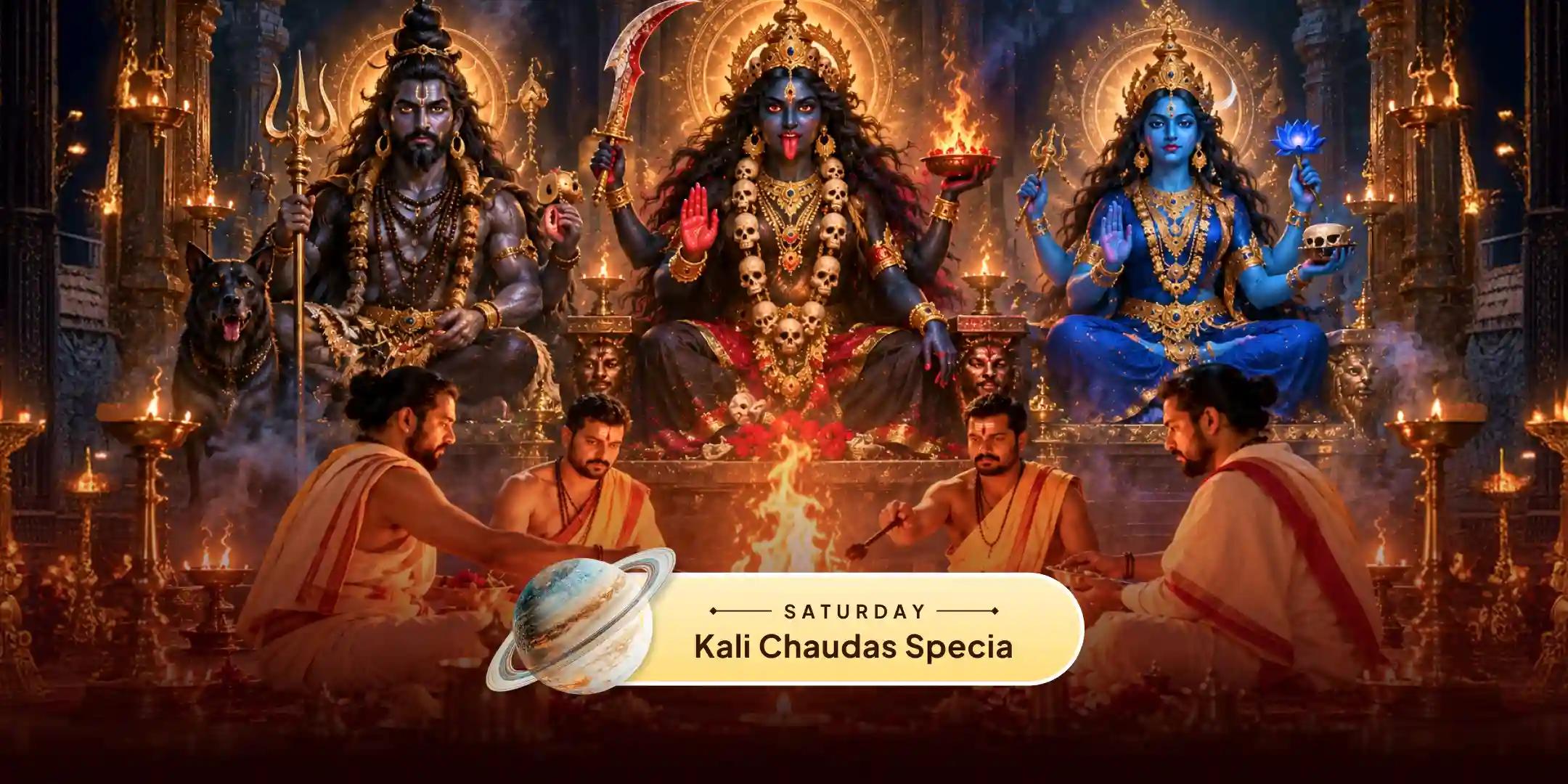



Kali Vahan Temple, Etawah
Kali Vahan Temple, located on the banks of the Yamuna River, is considered to be around three hundred years old. This temple in Etawah is special in itself, but its significance increases even more during Navratri. The Kali Vahan Temple, situated near the Yamuna River, is believed to be about 300 years old. Located in Etawah, this temple is considered very special. During Navratri, its importance grows further. People also refer to it as a Gupt Shaktipeeth (hidden seat of power). It is said that this temple, linked to the Mahabharata era, is highly miraculous. According to local belief, Ashwatthama, the immortal character from the Mahabharata, comes here in invisible form to offer the first worship.
History of Kali Vahan Temple, Etawah
Historical accuracy depends on solid evidence such as archaeological findings, ancient texts, or historical records. The Kali Vahan Temple of Etawah has several legends associated with it. It is believed to be linked to the Mahabharata era, and at one time, it was a major center of faith for the Chambal bandits. It is said that notorious bandits from Chambal, who were constantly evading the police, would come to this temple with complete faith to worship. Despite strict police surveillance, they would arrive with their entire gang to perform rituals. Evidence of this was found in the form of bells and flags in the temple inscribed with the names of these bandits, showing their deep devotion and the wishes they sought to fulfill here. This story illustrates that faith knows no boundaries – no matter who a person is, sincere belief can help them overcome all obstacles to reach the temple.
Architecture of Kali Vahan Temple, Etawah
The architecture of Kali Vahan Temple in Etawah is simple yet filled with devotion. The temple is built traditionally using bricks, stone, and cement. Key Features: Sanctum (Garbhagriha): The main part of the temple houses the idol of Goddess Kali, where devotees offer their prayers.
Shikhara (Dome): A tall dome above the temple is visible from a distance.
Entrance Gate: The temple gate has a traditional design with religious symbols.
Open Courtyard: There is open space around the temple for devotees to sit, pray, meditate, or sing bhajans.
Bells and Flags: Several bells and flags are installed by devotees as offerings, including some with the names of bandits.
Natural Beauty: The temple is situated near the flowing Yamuna River, giving the surroundings a peaceful and sacred ambiance.
Beliefs It is believed that when the sanctum of the temple is opened early in the morning, flowers are already placed on the idol of Goddess Kali. People believe that Ashwatthama, the immortal character from Mahabharata, comes first every day to worship the goddess. Devotees visit this temple not only from Etawah but also from neighboring states like Uttar Pradesh, Madhya Pradesh, and Rajasthan. All come to seek blessings and fulfill their wishes. It is said that anyone who comes here with sincere faith has their desires fulfilled. This is why devotees return to the temple year after year.
Visiting Hours
The temple is open throughout the year. Daily cleaning is done by the priests in the morning. Darshan is not allowed after the evening Aarti at 8 PM, and the temple reopens the next morning.
Prasad of Kali Vahan Temple
The offerings (Prasad) at Kali Vahan Temple, Etawah, are simple yet filled with devotion. Devotees offer prasad to Goddess Kali upon the fulfillment of their wishes. Common Offerings: Halwa-Puri: The most common prasad offered by devotees.
Coconut: Offered to the goddess and later distributed among devotees.
Chunari and Sindoor: Many devotees offer red chunari (veil) and sindoor to the goddess.
Incense and Camphor: Used during worship.
Belief: It is believed that anyone who offers prasad sincerely has their wishes fulfilled. Devotees travel from afar to make offerings and receive the goddess’s blessings.
How to Reach Kali Vahan Temple, Etawah
The temple is located about 5 km from Etawah city center, on the banks of the Yamuna River. By Train: Etawah Junction is the main railway station, on the Delhi-Howrah rail route. From here, taxis or auto-rickshaws can take you to the temple.
By Bus: Several bus stops in Etawah provide local buses or taxis to reach the temple.
By Air: Etawah does not have an airport. The nearest airport is Kanpur Airport, approximately 100 km away. From there, taxis or buses can take you to Etawah.

Did you like this article?
Recommended
Read more

Famous Temples in Varanasi
Discover famous temples in Varanasi you must visit in 2026. Explore history, significance, temple timings, and spiritual importance of Varanasi’s top temples.


Famous Shiva Temples in Chennai
Discover famous Shiva temples in Chennai you must visit in 2026. Explore history, significance, temple timings, and spiritual importance of Chennai’s top Shiva temples.

The Spiritual Heart of Pune
Discover the spiritual heart of Pune in 2026. Explore famous temples, ashrams, and sacred places that bring peace, devotion, and divine energy