 Download
 Share
ShareBaba Bhadeshwar Nath Temple, Basti
Planning to visit Baba Bhadeshwar Nath Temple in Basti? Discover its fascinating history, spiritual significance, daily timings, and the powerful puja rituals that make this temple a must-visit for devotees seeking blessings, peace, and prosperity.
About Baba Bhadeshwar Nath Temple
Baba Bhadeshwar Nath Temple, located in Basti, is a revered Hindu shrine dedicated to Lord Shiva. Devotees from nearby areas visit the temple to seek blessings for health, happiness, and spiritual growth. The temple is renowned for its peaceful atmosphere, divine energy, and the special rituals performed daily. People visit with faith, participate in puja, and listen to the sacred stories associated with Baba Bhadeshwar Nath. The temple’s spiritual significance helps devotees feel more positive, focused, and connected to their inner selves. It is a sacred place that encourages devotion, discipline, and overall well-being.
Pujas Chosen Just for You
Conduct a Puja in your name and gotra and seek divine blessings for your family.



Baba Bhadeshwar Nath Temple, Basti
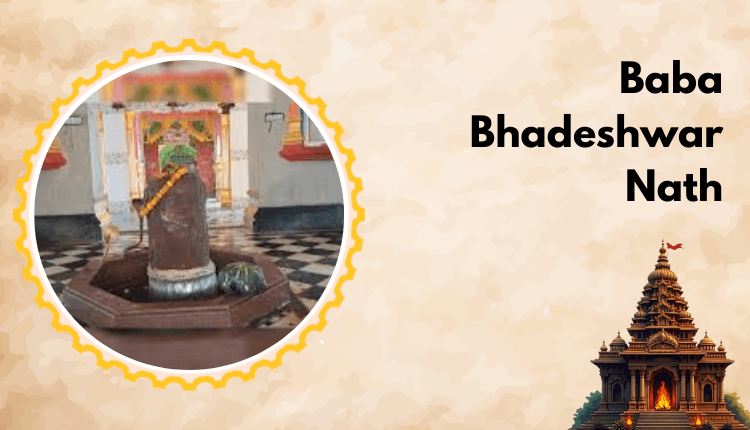
India is home to countless temples, all revered by devotees. In Basti, Uttar Pradesh, there is a temple where Lord Shiva is said to have performed divine pastimes. In this article, we explore the Baba Bhadeshwar Nath Temple in detail. Located about 6 kilometers from Basti district in the village of Bhadeshwar Nath, the Baba Bhadeshwar Nath Temple is dedicated to Lord Shiva. This temple is not only a spiritual center for the people of Basti but also for the entire Purvanchal region. Locals also refer to it as “Jharkhandeshwar Baba.” The Shiva Linga here holds significant religious, historical, and mythological importance, as it is situated in the middle of a river shaped like a Shiva bow and is even mentioned in the Shiva Purana.
History of Baba Bhadeshwar Nath Temple
According to mythological beliefs, this Shiva Linga appeared during the Dwapar Yuga with a divine light. At that time, the area was surrounded by dense forests and water streams. People were drawn to the divine light at night and began excavating the site. During excavation, poisonous bees, snakes, and scorpions emerged, causing many people to flee to the nearby Hattiyawa Nala, where some were found dead. The local king of Basti noticed the mysterious Shiva Linga and tried covering it with soil, but the Linga kept rising as more soil was added. Later, in 1728, the king appointed the ancestors of priest Jai Prakash Giri from Prasadpur village to perform worship here. Historians also believe that during their incognito exile, the Pandavas visited this temple for worship. During British rule, attempts by the British to occupy the temple were met with divine wrath — several people died, and the rest fled. After this, the British never tried to return.
Architecture of Baba Bhadeshwar Nath Temple
The current structure of the temple dates back to 1928, when Ayodhya Prasad Shukla from Mahso village, Basti Tehsil, renovated it. It is said that 10–12 attempts to build the temple had failed earlier — it would be built during the day and collapse at night. Lord Shiva is considered simple, approachable, and generous. He is Bhola Bhandari — even a little devotion, a sincere chant, or a single drop of water can please him. Beyond external rituals, he values devotion and the heart. His compassion extends equally to demons, gods, saints, and ordinary people. Shiva’s anger is also a form of his grace — when adharma (unrighteousness) rises, he performs Tandava to restore balance. When devotees call upon him, he immediately comes to help, never disappointing his followers. Shiva’s grace can be sudden but transformative, changing not just life but destiny itself. Lord Shiva himself appeared in a dream to Ayodhya Prasad, instructing him to construct the temple. There was a traditional belief that the lineage of those who build the temple would end. Despite this, Ayodhya Prasad began construction. Several family members passed away during the process, but he did not abandon his resolve. The Shiva Linga in the temple is mysterious — devotees trying to lift it find that it grows in size. Over the years, its shape has continued to change.
Temple Timings
The temple remains open throughout the year. Devotees visit daily, but special crowds gather on Mondays, during the month of Shravan, and on Maha Shivaratri. During Shravan, more than 5 million devotees bring water from the Saryu River (Ayodhya) and the Ganga River (Haridwar) to perform Abhishek (ritual bathing) of Lord Shiva. During Maha Shivaratri, devotees form long queues even two days in advance.
Prasad at Baba Bhadeshwar Nath Temple
The main offerings include Bilva leaves, Bhang, Datura, flowers, fruits, and Panchamrit (a mixture of five sacred substances). Devotees perform special prayers to fulfill their wishes and offer the Prasad on the Shiva Linga. It is believed that genuine prayers offered here are always fulfilled.
How to Reach Baba Bhadeshwar Nath Temple, Basti
By Train: Basti Railway Station is well-connected to major stations across India. From the station, auto-rickshaws, taxis, or local buses can easily reach the temple. By Bus: The Uttar Pradesh State Transport provides regular bus services to Basti. From the bus station, autos and tempos can take visitors to the temple in about 15–20 minutes. By Air: The nearest airport is Gorakhpur Airport, approximately 90 kilometers away. From Gorakhpur, taxis or buses can reach Basti.

Did you like this article?
Recommended
Read more

Famous Temples in Varanasi
Discover famous temples in Varanasi you must visit in 2026. Explore history, significance, temple timings, and spiritual importance of Varanasi’s top temples.


Famous Shiva Temples in Chennai
Discover famous Shiva temples in Chennai you must visit in 2026. Explore history, significance, temple timings, and spiritual importance of Chennai’s top Shiva temples.

The Spiritual Heart of Pune
Discover the spiritual heart of Pune in 2026. Explore famous temples, ashrams, and sacred places that bring peace, devotion, and divine energy