
 Download
 Share
Share

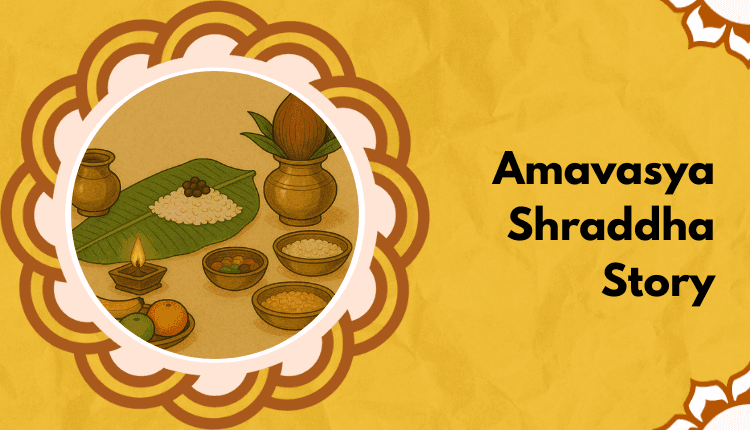
Amavasya Shraddha Story
Learn the divine story of Amavasya Shraddha, the final and most significant day of Pitru Paksha, where rituals are performed for all departed souls to bring peace, blessings, and spiritual upliftment.
Amavasya Shraddha Story in English
A well-known mythological tale from the Mahabharata era explains the significance of Shraddha rituals. After Karna, the noble and charitable warrior, died, his soul reached heaven. However, he was served gold and jewelry as food, which failed to satisfy his hunger. Karna asked Lord Indra why he wasn’t being given proper food. Indra explained that during his life, Karna had only donated gold and valuables but had never offered food (Anna Daan) to his ancestors. As a result, he could not clear his ancestral debt (Pitru Rin) and was served what he had donated. Karna admitted he had no knowledge of his ancestors and pleaded with Indra for a chance to correct his mistake. Indra granted him 16 days to return to Earth. Karna performed Tarpan and donated food to his ancestors with devotion. This period became known as Pitru Paksha (16 days dedicated to ancestors), marking the beginning of Shraddha rituals. It is believed that since then, the tradition of Shraddha has been practiced to honor ancestors and ensure their salvation.

Did you like this article?
Recommended
Read more
Holi Puja Vidhi Step-by-Step Guide
Perform Holi Puja 2026 correctly with this step-by-step guide. Know Holika Dahan muhurat, पूजा सामग्री, rituals, and the spiritual significance of Holi worship.

Holi in Mathura and Vrindavan
Experience Holi 2026 in Mathura and Vrindavan. Discover famous celebrations like Lathmar Holi, Phoolon ki Holi, temple rituals, and travel tips for the festival.
Difference Between Holi and Holika Dahan
Confused between Holi and Holika Dahan? Learn the key differences in date, rituals, meaning, and cultural importance of these two major Hindu festivals.